
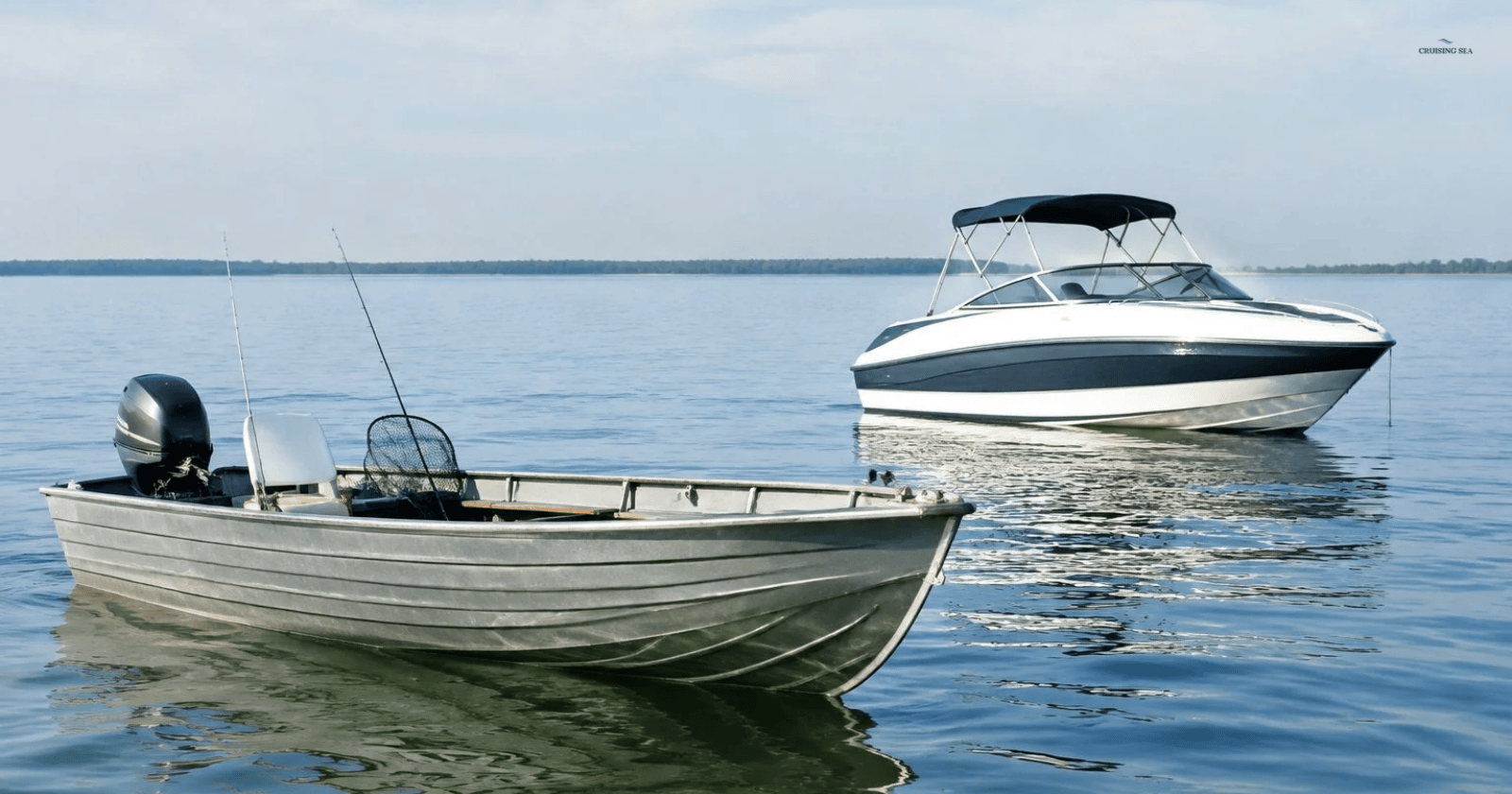
Shopping for a boat and stuck between aluminum and fiberglass? You’re not alone — it’s one of the first big decisions every boat buyer faces, and honestly, there’s no one-size-fits-all answer.
Here’s the catch: two boats can be the same length and still be totally different animals. A heavy-duty aluminum fishing boat has way more in common with a loaded-up fiberglass bass boat than it does with a bare-bones jon boat — even though “aluminum” is the label on both. So pay attention to what’s actually built into the boat, not just the material.
As you shop, keep your home waters and your tow vehicle in mind. And leave room in your budget for the stuff that comes after the sale — trailer, engine upkeep, the inevitable repairs.
The Main Trade-Offs, At a Glance
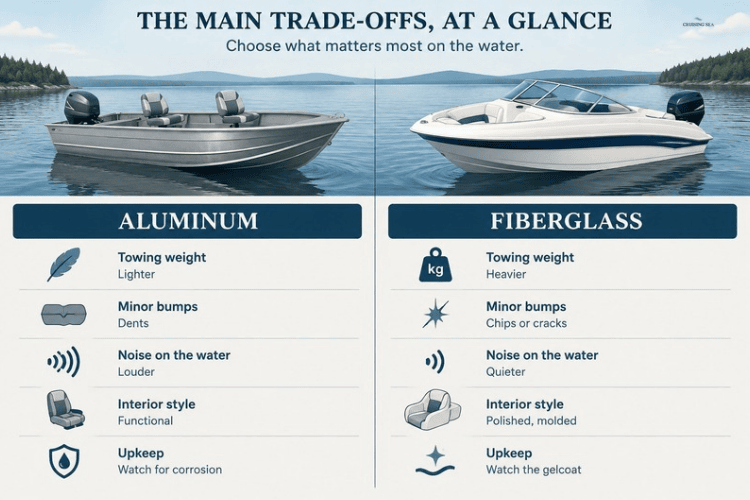
Aluminum wins when weight matters. Fiberglass wins when quiet comfort and polished layouts matter. Here’s the cheat sheet:
| What You Care About | Aluminum | Fiberglass |
|---|---|---|
| Towing weight | Lighter | Heavier |
| Minor bumps | Dents | Chips or cracks |
| Noise on the water | Louder | Quieter |
| Interior style | Functional | Polished, molded |
| Upkeep | Watch for corrosion | Watch the gelcoat |
Aluminum really shines if you’re trailering often and fishing shallow water — plus, it’s forgiving when your gear is muddy, and you just want to hose things down. Fiberglass starts to look better when you want family-friendly seating and built-in storage. The extra weight often makes for a steadier ride too, though honestly, hull shape matters more than material here.
One thing that applies no matter what you buy: check the construction quality. You want solid joints, a transom that can handle the engine, and a deck that doesn’t flex under your feet.
Weight and Hull Shape: How They Affect Towing and Ride
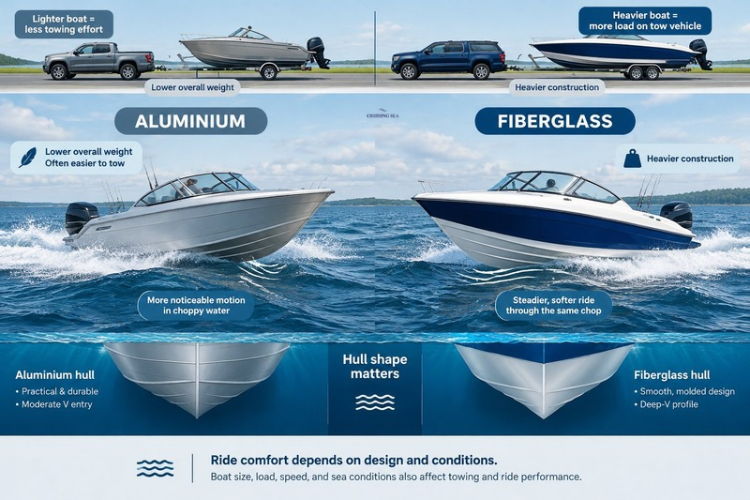
Here’s a common mistake: looking at the “dry weight” listed by the manufacturer and thinking that’s what you’ll be towing. It’s not even close. Add the engine, battery, fuel, gear, and trailer, and suddenly that number looks very different. Always check the full package against what your vehicle can actually handle — and double-check what the manufacturer’s weight figure does and doesn’t include.
Generally, aluminum boats start out lighter than similarly sized fiberglass ones. But load up a boat with heavy-duty plating and tons of equipment, and that gap shrinks fast.
For ride quality, the hull shape matters more than what it’s made of. A deep V cuts through chop nicely; a flat bottom gives you shallow draft and stable footing when you’re fishing — but expect more pounding when the water gets rough.
Stability also comes down to width and how weight is distributed, not just the material. Don’t assume fiberglass automatically means a steadier boat.
Best advice? Take it for a sea trial. Run it at normal speed, sit where your passengers will sit, and see how it actually feels — not how it looks on paper.
What’s This Really Going to Cost You?
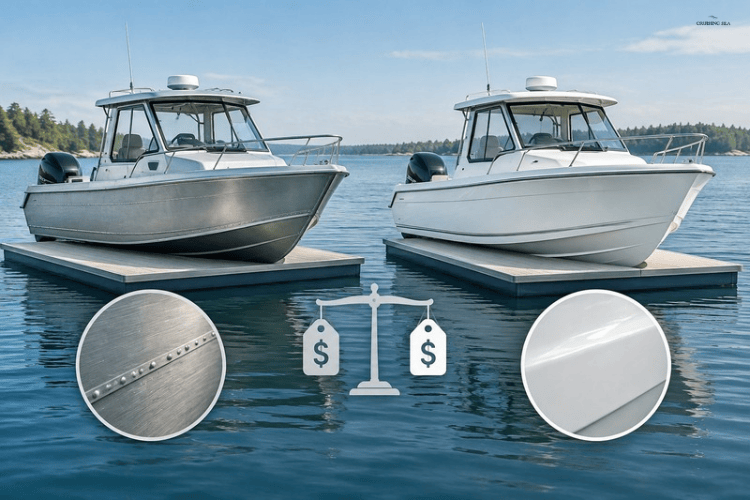
The real comparison isn’t the sticker price — it’s the total cost of ownership for similarly equipped boats, engine and trailer included.
Entry-level aluminum setups are usually cheaper than comparable fiberglass fishing boats. But once you start adding premium welds and nice electronics, that price gap can disappear. Get itemized quotes so you’re comparing apples to apples.
Here’s what to actually budget for:
- Buying it: Boat, engine, trailer, taxes, fees
- Owning it: Insurance, storage, fuel, routine maintenance
- Fixing it: Tires, batteries, pumps, upholstery, hull repairs
- Selling it: Pre-sale repairs, broker fees, paying off any loan
A lighter boat might save you gas while towing, but fuel burn on the water depends more on your engine and how fast you like to go. Ask for real fuel numbers for your specific boat-engine combo.
When it comes to resale, compare local listings of similar age and condition — don’t assume every fiberglass boat holds value like a Boston Whaler does. That’s one brand’s reputation, not a material’s.
And whatever you buy, keep your service records. If you’re buying used, get an independent inspection and have someone check the engine before you commit — it’s much cheaper to find problems before you own them.
Which Handles Impacts and Saltwater Better?
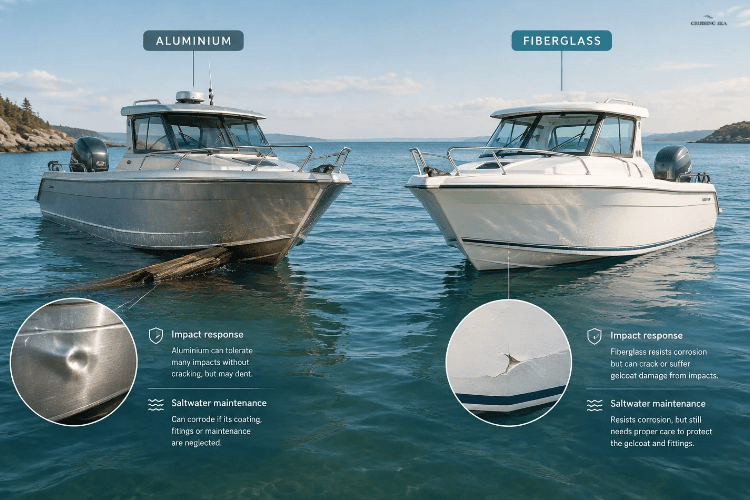
Aluminum tends to dent rather than crack when it takes a hit — which is nice for peace of mind in shallow, rocky water. Hit it hard enough, though, and you’re looking at torn metal or a leaking seam. Fiberglass, on the other hand, chips the gelcoat and can crack the laminate underneath with a serious impact.
Either way, get a repair quote before assuming damage is “no big deal.” Aluminum welding takes real skill, and fiberglass repair needs careful bonding and finishing work. Hidden damage can complicate both.
If you’re running an aluminum boat in saltwater, do yourself a favor:
- Rinse it with fresh water after every trip
- Keep those sacrificial anodes maintained — they corrode so your hull doesn’t
- Don’t let incompatible metals touch at fittings
- Watch for electrical issues that can speed up corrosion
- Use bottom paint made for aluminum if it stays in the water
Fiberglass skips the corrosion worries, but you’ll still need to protect underwater hardware and keep an eye on the gelcoat for blisters or cracks.
One more thing regardless of material: check the transom and deck for soft spots. Some have wood cores underneath, and water getting in there is bad news either way.
So, Which One Should You Actually Buy?
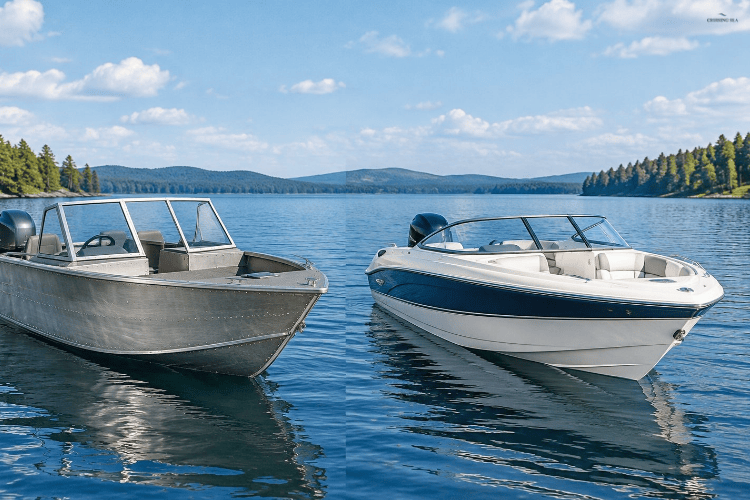
Go aluminum if easy towing and shallow-water fishing are your priorities. Go fiberglass if comfort and quiet matter more to you.
Fishing small lakes or rivers? A jon boat is a solid, affordable starting point. Aluminum bass boats are great for frequent launches and shallow cover. If you want a big casting deck and plan to cross open water regularly, a fiberglass bass boat might suit you better.
Heading out into coastal bays or taking the family along? Both materials offer solid options — just match the hull and layout to how you’ll actually use it.
Before you sign anything, get an independent inspection and take it out for a sea trial on water that’s similar to where you’ll actually be boating.
Read Also:
Frequently Asked Questions
Does galvanic corrosion only affect aluminum boats?
No, galvanic corrosion can affect any boat with metal fittings in saltwater, but aluminum hulls are more vulnerable because the hull itself is the reactive metal. Stainless steel fasteners or fittings touching an aluminum hull create a corrosion cell that eats away at the aluminum over time. Sacrificial zinc anodes and regular inspection control this, and it’s a manageable issue, not a reason to avoid aluminum boats in saltwater.
Is an aluminum bass boat tougher than a fiberglass bass boat?
An aluminum bass boat handles impacts and scrapes better, since dents don’t compromise the hull the way a crack can in fiberglass. A fiberglass bass boat rides smoother and faster on calm water, which matters more on big reservoirs than on rocky rivers. Neither one is universally “tougher”; they’re built for different kinds of abuse.
Can fiberglass boats handle saltwater as well as aluminum?
Yes, fiberglass boats handle saltwater fine when built and maintained for it, since the hull material itself doesn’t corrode. Hardware, fittings, and trailers still need saltwater-rated components either way. The real difference is upkeep style: fiberglass needs gelcoat care, aluminum needs anode checks and corrosion prevention.
Which hull material holds up better for frequent trailering?
Aluminum boats generally handle frequent trailering better because they’re lighter, which means less strain on the trailer, hitch, and tow vehicle over time. Fiberglass boats trailer fine too, but their extra weight means more wear on trailer components and a bigger tow vehicle requirement.
How Long Should You Expect an Aluminum Boat to Last?
You can get decades of service from a well-built aluminum boat with proper care. When shopping used, judge corrosion, repairs, and structural condition alongside age, and budget separately for an aging engine.
More to read:

Daniella has been passionate about travel, the sea, and nature for many years. As a child, she frequently traveled throughout the Mediterranean and continued with her journeys throughout her adult life.
Her experiences have created the desire within her to share her love for traveling with other passionate and adventurers who want to discover beautiful horizons and new cultures.