
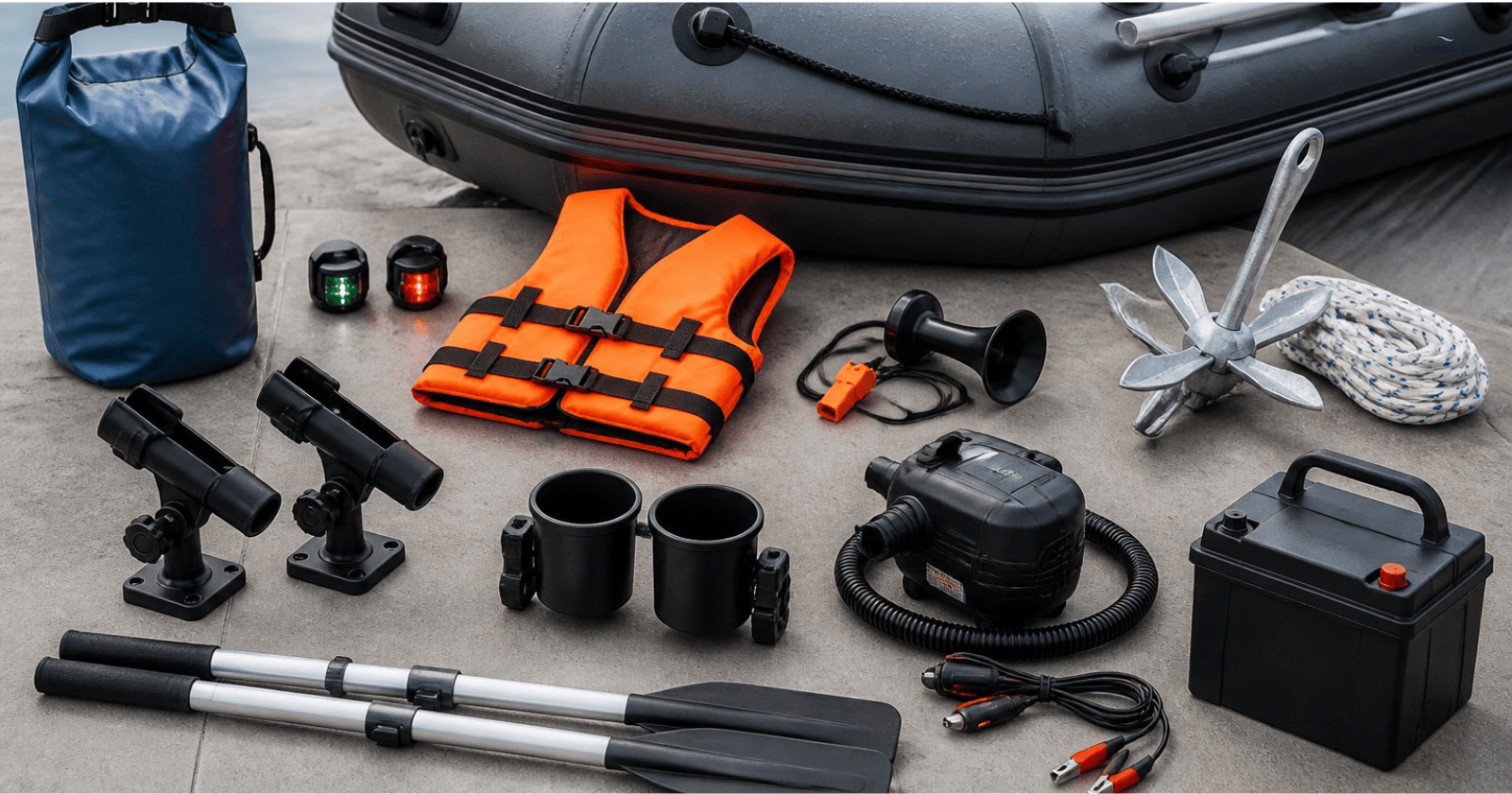
So you’ve got an inflatable boat. It’s light, it packs down small, and it gets you on the water without a trailer or a boat ramp. But if you’ve ever spent an afternoon hand-pumping in the sun or fumbling for a place to set your drink, you know the boat itself is only half the story.
The right accessories turn a basic inflatable into a comfortable, safer, and far more useful boat, whether you’re fishing, cruising, or using it as a tender. Some of these items keep you legal and protected. Others just make your day easier. Here are ten worth adding to your setup.
This post contains affiliate links. If you use these links to buy something, we may earn a commission. Thanks.”
1) High-pressure electric pump
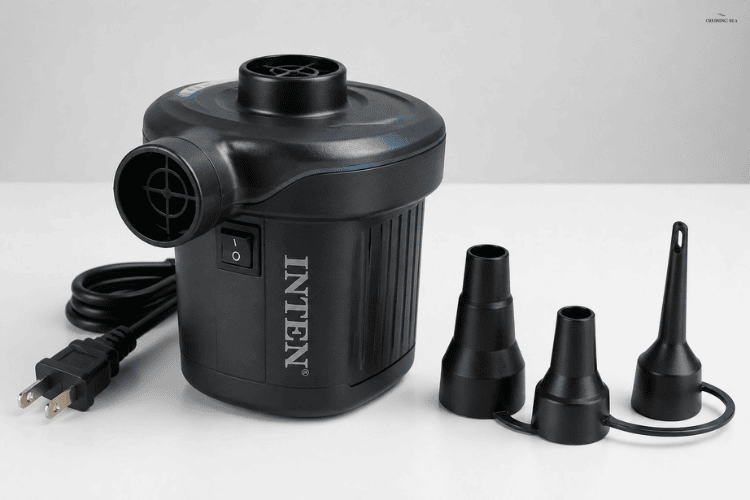
Nobody wants to spend their first hour at the lake huffing and puffing over a manual pump. That’s why a high-pressure electric pump should be at the top of your gear list.
These air pumps can hit up to 20 PSI, which is plenty for most inflatable boats. Look for one with dual-stage operation, since it starts fast and finishes strong for a firm, ready-to-launch boat.
A digital display is a nice touch too. You’ll be able to watch the pressure climb instead of guessing, and most models shut off automatically once you hit your target. That means less chance of overinflating and stressing out your boat’s seams.
Multiple nozzle adapters are also worth having. Boats, SUPs, and kayaks all use different valves, so a pump with several attachments saves you from buying separate tools for each item.
If you plan to inflate gear away from an outlet, check for car power compatibility. That way, you can plug into your vehicle and get everything ready before you even reach the water.
2) Compact Marine Battery or Portable Power Station
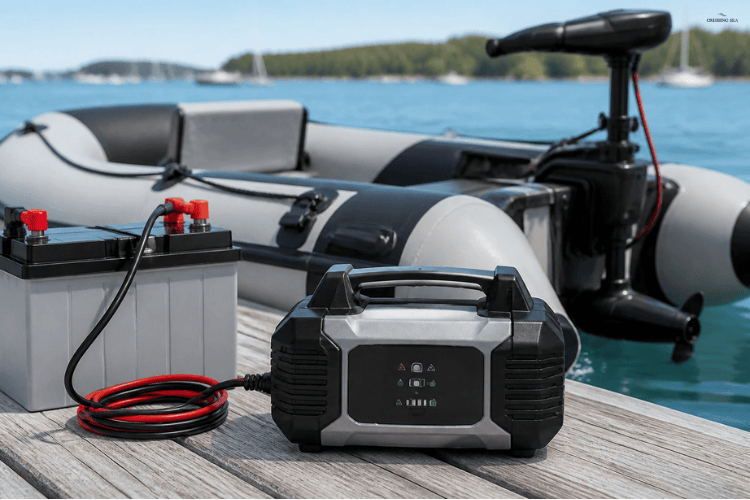
Let’s talk power, because nothing kills a good day on the water faster than a dead battery. If you’re running a trolling motor, fish finder, or even just a phone charger, you need juice that won’t quit on you.
A small 12V marine battery is your best bet for onboard gear. These are built to handle water splashes and the constant bumping around that happens on a boat. Look for one with a solid lifecycle rating, so you’re not replacing it every season.
If you want more flexibility, a portable power station is worth checking out too. These let you charge multiple devices at once and some can even jump-start your motor battery if things go sideways.
Before you buy anything, though, take a second to check what battery chemistry your boat already uses. Not every charger or power station plays nice with every battery type, and mismatching them can cause real damage.
Whatever you choose, make sure it’s rated for marine use. Regular batteries just don’t hold up the same way out on the lake.
3) Adjustable aluminum oars with secure oarlocks
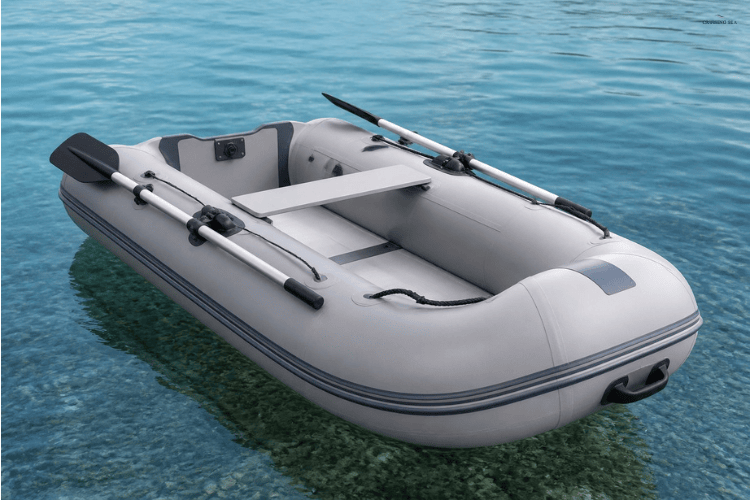
Good oars can make or break your day on the water. If you’re paddling with cheap, wobbly oars, you’ll tire out fast and probably drift somewhere you didn’t plan on going.
Aluminum oars are a solid pick because they’re light but still tough enough to handle regular use. You won’t be fighting heavy gear every time you row, and your arms will thank you later.
Look for oars that adjust in length. Every boat is different, and being able to tweak the size means you get a comfortable grip and better control, no matter who’s rowing.
Oarlocks matter just as much as the oars themselves. Secure oarlocks keep your oars locked in place so they don’t pop out mid-stroke, which is annoying and kind of dangerous if you’re in choppy water.
Some sets come with adjustable oarlocks too, so you can angle them for a smoother, more natural rowing motion. That small detail can save you a lot of arm strain on longer trips.
At the end of the day, a solid set of oars and oarlocks means less struggling and more fun on the water.
4) Certified personal flotation devices for every passenger
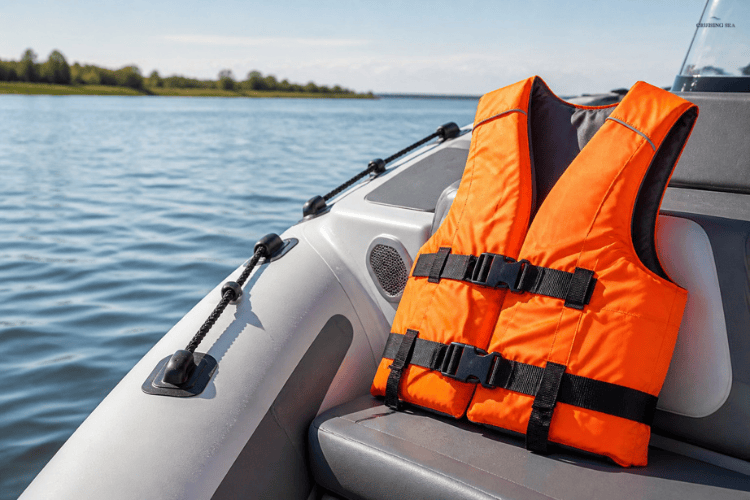
A life jacket isn’t the most exciting item on your gear list, but it’s the one thing you actually can’t afford to skip. The U.S. Coast Guard requires an approved PFD for every single person on your boat, and that rule applies to your little inflatable just as much as any yacht.
Skip the cheap knockoffs. Check the label to make sure it’s USCG-approved, and grab the right size for each passenger, since a jacket that’s too big or small won’t do its job when you need it most.
If your inflatable stretches past 16 feet, you’ll also need a throwable device like a ring buoy or cushion on board. It’s a small addition that rounds out your safety setup.
Keep every PFD somewhere you can grab fast, not buried under coolers or fishing gear. And give them a quick once-over before each trip, checking for rips, mildew, or straps that have seen better days.
Your inflatable boat is all about fun on the water, but a little prep goes a long way. Pack the jackets, check the fit, and you’re covered.
5) Waterproof dry bag for phones, keys, and valuables
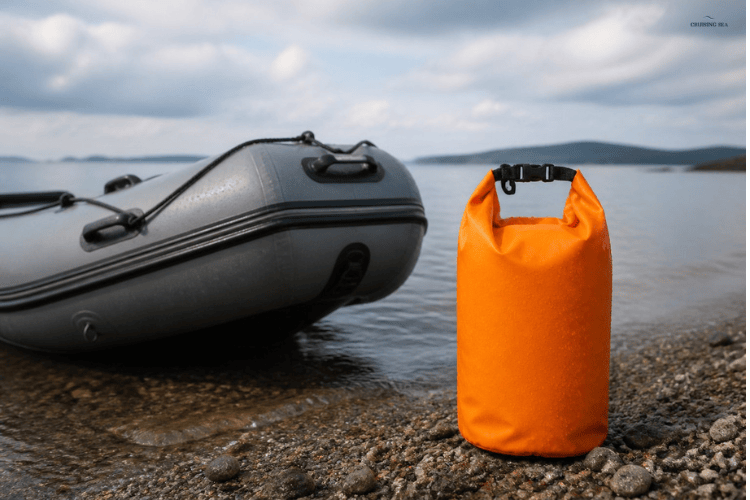
Water and phones don’t mix. You know this. But you’re still going to bring your phone on the boat anyway, so let’s talk about how to keep it in one piece.
A dry bag is basically insurance for your stuff. Toss your phone, keys, and wallet inside, seal it up, and stop worrying every time a wave splashes over the side. Most dry bags use a roll-top closure, which just means you fold the top down a few times and clip it shut. Simple, but it works.
You don’t need anything fancy here. A small dry bag in the 2 to 5 liter range is plenty for phones, keys, and a wallet. Some even float if they end up in the water, which is a nice bonus if you’re the type who drops things (no judgment).
Look for one with a clear front panel if you want to use your phone through the bag without opening it. Also check the seal rating before you buy. You want something that can handle a splash, not just humid air.
6) Rod Holders and Cup Holders
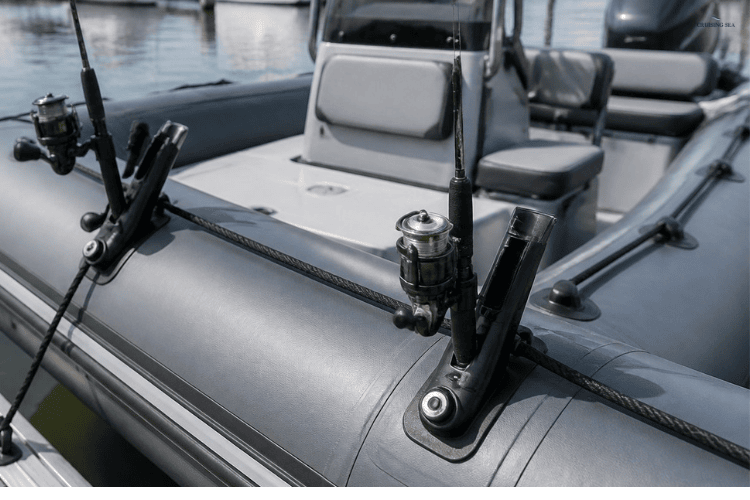
If you like to fish or just want a place to stash your drink, these two accessories make a big difference. Rod holders clip onto the tubes of your inflatable boat and hold your fishing rod steady while you drive, drift, or wait for a bite.
Most rod holders come with clamps that fit round or square tubes, so you can adjust them to fit your boat. Look for ones with 360-degree rotation. That way you can angle your rod exactly how you want, whether you’re trolling or just relaxing.
Cup holders are the unsung heroes of any boat day. Nobody wants to hold their soda the whole trip or watch it tip over every time you hit a wave.
Many cup holders attach right next to your rod holders, so you get both in one spot. Some setups even include cell phone or tablet holders, which is nice if you like checking the weather or snapping photos.
Installation is usually simple. Most clamp on without tools, so you can add or remove them whenever you want. Just make sure they’re rated for your boat’s tube size before you buy.
7) Marine-grade anchor with rope and compact storage bag
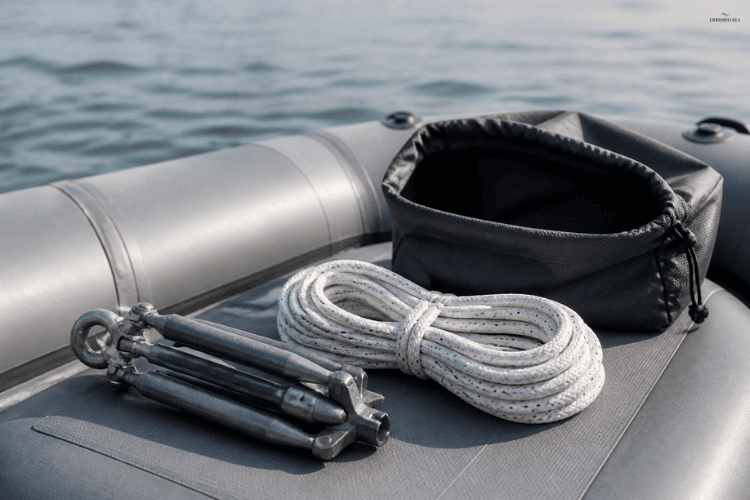
Let’s talk about the thing that actually keeps your boat in one spot: an anchor. This one gets overlooked a lot, but drifting away from your favorite fishing spot gets old fast.
A folding anchor is your best bet here. Most weigh around 3.5 pounds and fold down to something like 12 inches, so it won’t hog space in your storage compartment. Look for one made from galvanized steel or aluminum with an anti-rust coating, since you’ll be dunking this thing in water constantly.
You’ll also want decent rope with it, not just any random cord you grabbed from the garage. Marine-grade rope, around 16 to 25 feet, holds up better against saltwater and sun damage over time.
Here’s the part people forget: storage. A padded bag keeps your anchor from scratching up your boat’s floor or poking a hole in something it shouldn’t. Some kits even throw in a buoy and a snap hook, which makes the whole setup pretty much ready to go right out of the box.
Read also: How to anchor an inflatable boat
8) Telescoping boat ladder for easier boarding
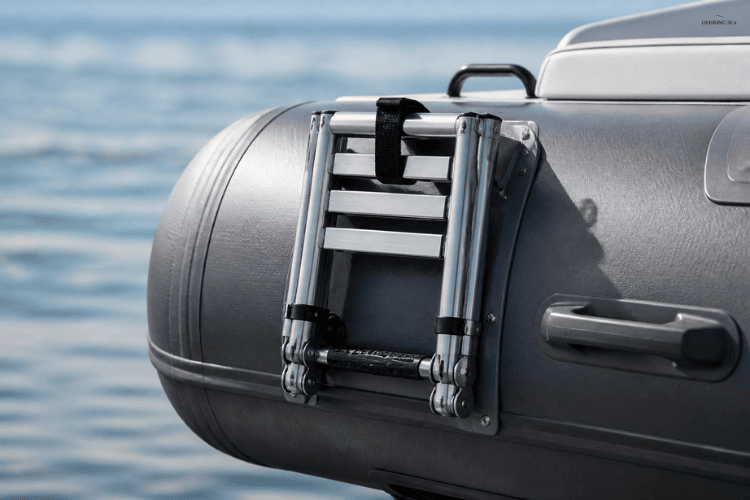
Climbing back into your inflatable after a swim can be challeging. A telescoping ladder makes this whole process way less awkward.
These ladders are made to fit the shape of inflatable tubes, so you get a stable spot to step on instead of fighting with slippery, round sides. Most attach with tension straps or mounting plates that you can adjust to fit your boat.
When you’re done using it, the ladder folds down small enough to tuck away without taking up your whole storage space. That’s a nice perk if your boat is already packed with gear.
Look for stainless steel construction since it holds up better against saltwater and general wear. Non-slip steps are also worth checking for, especially if you’ll be climbing out with wet feet.
Whether you’re coming back from a swim, a dive, or just hopping back on board from the dock, having a proper ladder makes the whole thing easier and honestly a bit less embarrassing to watch.
9) Clip-on LED navigation lights for low-light visibility
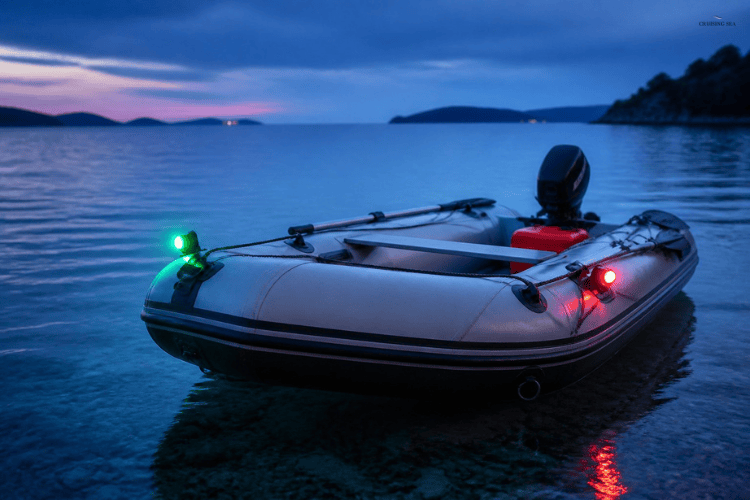
Ever tried finding your inflatable boat on the water after dark? It’s not fun. That’s where clip-on LED navigation lights come in handy.
These little lights attach right to your boat’s edges without any tools or drilling. Just clip them on and you’re ready to go.
Most models give you red, green, and white LED options. This matters because boating rules often require different colors on different sides of your boat.
You’ll also want to check the battery life before you buy. Some lights run on USB charging, while others use regular batteries. Either way, look for something that lasts at least a few hours per trip.
Water resistance is another thing to think about. Since your boat sits low in the water, splashes happen often. A light rated IPX5 or higher should handle that just fine.
The best part? These lights are cheap and small enough to toss in a bag. You won’t even notice the extra weight, but other boaters will definitely notice you.
If you paddle at dawn, dusk, or after dark, this accessory isn’t just nice to have. It helps other boats see you coming, which keeps everyone safer out there.
10) A sound signal
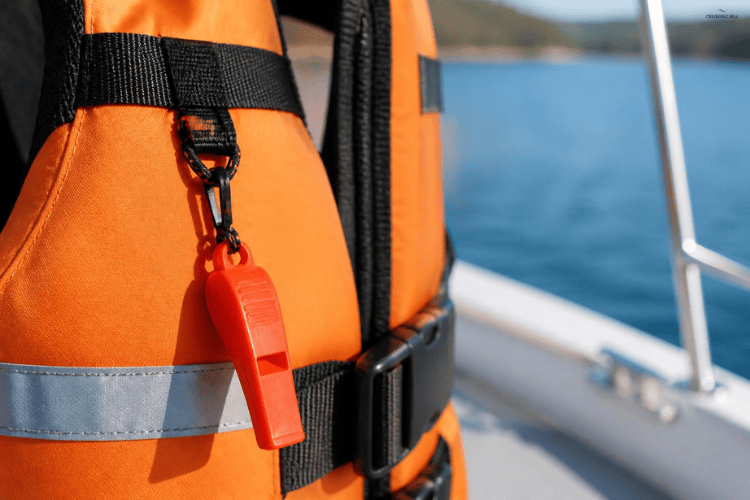
Every boat needs a way to make noise, and no, yelling doesn’t count. A sound signal is one of those things you might forget about until you actually need it, like when another boat is heading your way in the fog.
For most inflatable boats, a simple whistle does the job. It’s small, cheap, and clips right onto your PFD so you’ll actually have it when you need it (unlike that one flashlight you swear you packed).
If you’ve got a bigger inflatable with a motor, you might need something louder, like an air horn. Check your local rules, since requirements can change based on your boat’s size and where you’re boating.
Here’s the thing: a sound signal isn’t just a nice-to-have. It’s often legally required, and for good reason. If you’re stuck in low visibility or need to alert another boat, a quick blast can seriously save the day.
Grab one that’s rated for marine use so it won’t quit on you when it gets wet. Toss it in your safety kit, so you don’t need to worry not to have one in case you need it.
Choosing Accessories That Fit Your Boat
Not every accessory works for every boat, so you’ll want to think about your boat’s size and how you actually use it before you buy anything. Getting this part right saves you money and keeps you safer out on the water.
Matching Gear to Boat Size and Capacity
Your boat’s size and weight capacity should guide almost every purchase you make. A 10-foot dinghy and a 16-foot RIB just can’t handle the same gear, so check your specs before you shop.
Here’s what to look at:
- Weight limits: Add up passengers, gear, and fuel before you toss in extras
- Deck space: Bigger accessories like coolers or casting platforms need room to sit without blocking movement
- Tube diameter: Wider tubes handle more accessories, like rod holders or mounted lights
- Transom size: This determines which motor size and mounting accessories will actually fit
Buying oversized gear for a small boat throws off your balance and makes handling harder. Stick to what your boat’s specs allow.
Prioritizing Safety and On-Water Conditions
Safety gear isn’t optional, and it’s the one category where you shouldn’t cut corners. Start with the basics: life jackets for everyone on board, a whistle or horn, and a first aid kit.
Your water conditions matter too. If you’re heading into choppy water or open coastline, you’ll want a bilge pump and extra flotation gear on hand.
Calmer lake trips need less backup equipment, but a repair kit is still smart no matter where you paddle. Check your local boating laws as well, since required safety gear can vary depending on where you launch.
Care, Storage, and Setup Tips
Taking care of your inflatable boat doesn’t have to be a chore. A few simple habits will keep your gear working great and save you money down the road.
Preventing Damage From Sun, Salt, and Sand
UV rays are rough on inflatable boat material, so a boat cover is your best friend here. Leaving your boat out in direct sunlight day after day breaks down the fabric faster than you’d think.
Salt water is another sneaky culprit. It dries out and cracks the material if you don’t rinse it off.
After every trip, give your boat a quick freshwater rinse. Pay extra attention to these spots:
- Valves and fittings – salt buildup can cause leaks
- Seams – sand can wear them down over time
- Floor area – grit gets trapped here easily
Let it dry fully before you pack it away. A damp boat in storage is a recipe for mold.
Read also: How to clean an inflatable boat
Packing Your Boat for Easier Launches
Nobody wants to wrestle with a tangled mess at the ramp. Fold your boat the same way every time so you build a routine that speeds things up.
Start by deflating it evenly, then roll from the back toward the valves to push out extra air. Keep your pump, oars, and repair kit in one dedicated bag so you’re not hunting for gear later.
A rolling cart or set of launching wheels makes hauling everything to the water way easier on your back. Store folded boats somewhere cool and dry, away from sharp objects that could poke through the material during transport.
Read also: How to store an inflatable boat

Daniella has been passionate about travel, the sea, and nature for many years. As a child, she frequently traveled throughout the Mediterranean and continued with her journeys throughout her adult life.
Her experiences have created the desire within her to share her love for traveling with other passionate and adventurers who want to discover beautiful horizons and new cultures.