
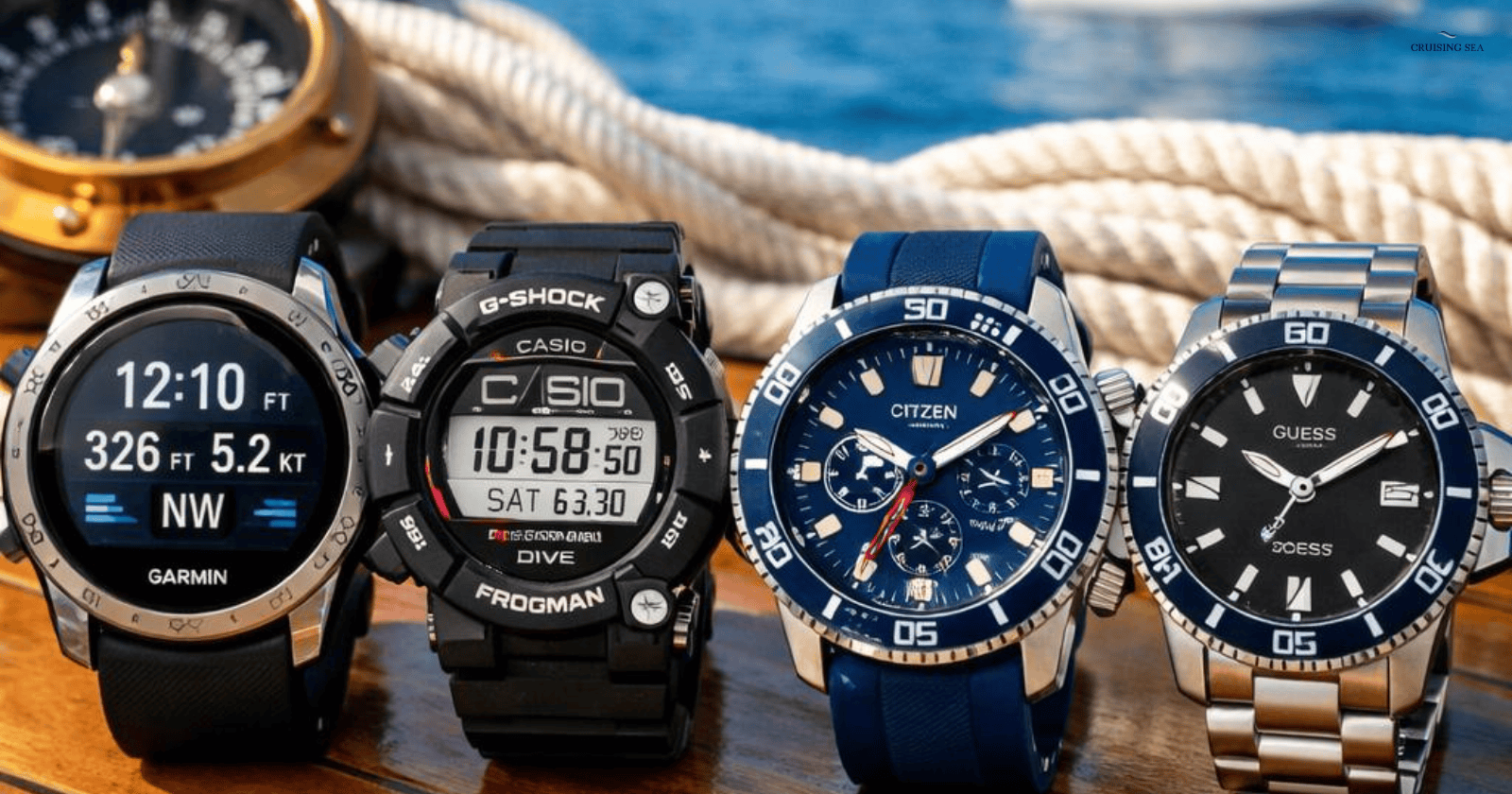
Stop guessing the tides and start mastering the waves. When you’re out on the boat, your watch needs to do more than just tell time—it needs to handle splashes, spills, and the occasional overboard dip without breaking a sweat. So I’ve narrowed down the field to the 6 top-rated marine watches for boating on the market right now. From sleek chronographs to rugged GPS powerhouses, these are the top picks you’ll want on your wrist this season.
This post contains affiliate links. If you use these links to buy something, we may earn a commission. Thanks.”
TOP RATED
6 Best-Rated Marine Watches for Boating
Below, you’ll find the best-rated marine watches you can buy right now for boating. Each one gives you reliable timekeeping, strong water resistance, and features that help you stay on track on the water. Pick the one that fits your needs and your budget, and head out with confidence.
1) GUESS Men’s Analog Multi-Function Watch

Pros
- The black dial with multiple functions gives you day, date, and military time all in one glance
- The stainless steel build feels solid and looks more expensive than its price tag suggests
- The 100-meter water resistance handles splashes and rain without issues
Cons
- The bracelet sizing runs small and might not fit larger wrists comfortably
- Despite the water resistance rating, you shouldn’t trust it for swimming or extended water exposure
- The mineral crystal scratches more easily than sapphire glass found on pricier watches
The 44mm case sits nicely on the wrist without feeling too bulky. When you’re out on the water checking the time, the black dial stays easy to read even in bright sunlight. The brushed and polished stainless steel catches the light well and gives the watch a premium appearance.
You’ll appreciate having the day and date right on the dial when you’re planning your next boating trip. The 24-hour military time function comes in handy if you track tides or communicate with other boaters. The fold-over clasp with double push buttons keeps the watch secure on your wrist when you’re moving around the deck.
The water resistance handles everyday moisture well. You can wear it in the rain or if some spray comes over the bow. However, reviewers said they wouldn’t wear it for diving. The 100-meter rating sounds good on paper, but this watch performs better as a casual timepiece than a true dive watch.
The bracelet adjustment might frustrate you if you have larger wrists. Some users only needed to remove one link, which suggests the sizing runs tight. The mineral crystal does its job protecting the dial from minor bumps, but it won’t hold up to scratches as well as harder materials.
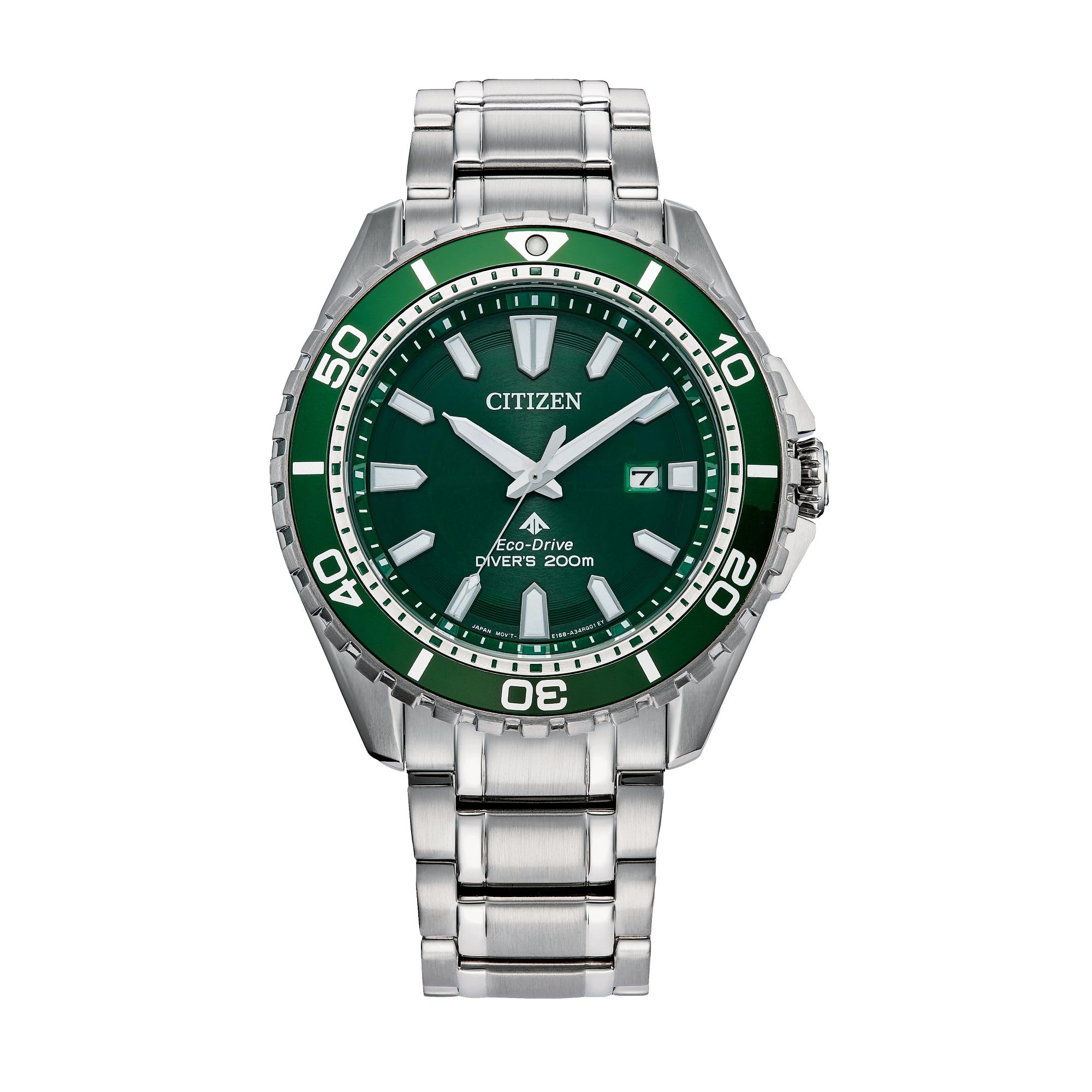
2) Citizen Promaster Eco-Drive Green Dial
Pros
- Solar charging means you never have to worry about replacing batteries while out boating
- The green dial stands out and stays easy to read in different lighting conditions
- Rated for 200 meters of water resistance, so it handles any marine activity
Cons
- The date window is pretty small and hard to read quickly
- The metal bracelet might feel heavy if you prefer lighter watches
- At 45mm, it wears large and might look oversized on smaller wrists
The Eco-Drive technology really shines when you’re spending long days on the water. You just expose the dial to light, and it keeps running for months. Many customers found this feature incredibly useful during extended boating trips where charging devices become a hassle.
The green dial will catch your eye right away, it makes checking the time easy even in bright sunlight. The luminous hands glow well at night when you need to check your position during evening cruises. The rotating bezel clicks smoothly and helps you track elapsed time for navigation or diving.
Customers found that the watch holds up well to saltwater exposure. The stainless steel bracelet feels solid but adds weight to the overall package. You can swap it out for a NATO strap if you want something lighter and more casual for boating. The 200-meter water resistance rating gives you confidence whether you’re fishing, swimming, or just dealing with spray from the waves.
3) Garmin Instinct 3 Tactical

Pros
- Solar charging keeps the battery going for weeks without needing a plug
- Built tough enough to handle rough water and bumps on your boat
- GPS works great for tracking your position while sailing
Cons
- The large 50mm size feels bulky on smaller wrists
- Takes some time to learn all the different features and settings
- Costs more than basic marine watches
The solar charging on this watch really stands out. You can wear it all day while sailing, and the sun keeps it powered up. Many found that after spending a few hours outside, the battery barely dropped at all.
The rugged build handles everything you throw at it. Some users mentioned they wore it while tubing and took some hard falls into the water, and the watch kept working perfectly. The metal bezel and tough lens protect it from scratches when you’re working around the boat.
Navigation features work really well for boating. The GPS locks on quickly and tracks your position accurately. The compass and altimeter give you useful information while you’re out on the water. The 10 ATM (100m) water rating means you don’t have to worry about waves or spray.
The size might be too much for some people. It’s a chunky watch that sticks out pretty far from your wrist. But buyers loved how the big screen makes it easy to read in bright sunlight. The buttons work well even when your hands are wet, which beats trying to use a touch screen on the water.
Battery life impressed boaters the most. With regular use, including GPS tracking, some even said they went over three weeks between charges. If you spend time outside in the sun, you might never need to plug it in. The health tracking features, like heart rate monitoring, work in the background without draining the battery fast.
4) Casio G-Shock GA-100

Pros
- Takes a beating and keeps working thanks to shock resistance
- Works well in water up to 660 feet deep
- Bright LED light makes it easy to read at night
Cons
- The large 51mm case feels bulky on smaller wrists
- Takes time to learn all the button functions
- White band shows dirt and stains quickly
This Casio G-Shock GA-100 holds up really well for short and long trips. The shock resistance means you don’t have to baby it when you’re handling ropes or bumping into things on deck. Some buyers mentioned that it survived several hard knocks that would have damaged their old watch.
The 200-meter water resistance gives you peace of mind when waves splash over the side, or you’re working in the rain. You can even jump in for a quick swim without worrying about it. The auto LED feature works great when you’re checking the time during early morning or late evening trips.
The white and black color scheme looks sharp and stays visible in different lighting conditions. Your watch face stays easy to read whether you’re in bright sun or shade. The analog and digital displays give you options for how you want to check the time.
Setting up the world time and alarms takes some practice with the buttons. You’ll probably need to check the manual a few times before you get it right. But once you figure it out, having five daily alarms helps you keep track of tide changes or fishing schedules.
The resin band and case keep the weight down, so it doesn’t feel heavy during long days on the water. But that white band picks up grime from handling fishing gear and dock lines. You’ll need to wipe it down regularly to keep it looking clean.
5) Casio G-Shock DW9052-1V

Pros
- Takes a real pounding and keeps working through rough conditions on deck
- Battery lasts about two years, so you won’t worry about it dying mid-trip
- Easy to read at night with the bright backlight that stays lit for a few seconds
Cons
- Feels lighter than other G-Shocks, which might make you question its durability at first
- Numbers can be small for some people to read quickly
- Band feels a bit stiff when you first start wearing it
Anglers ‘ve been wearing this watch on fishing trips and loved how it handles saltwater spray without any issues. The 200-meter water resistance allows you to jump in for a swim or get soaked by a wave without worrying. It just works.
The stopwatch comes in handy when you’re timing how long you’ve been anchored or tracking engine hours. You get accurate readings down to hundredths of a second, which is more precise than most people need but nice to have. The countdown timer helps when you’re tracking tides or cooking something below deck.
Setting up the alarms can take a few minutes to figure out, but once you get it, you won’t need to look at the manual again. The blue-green backlight is bright enough to check the time in a dark cabin without waking anyone up. One press lights up the whole display clearly.
This watch has held up for years, according to other boaters I know. Some have only needed to swap the battery and maybe replace the band after heavy use. At this price point, you’re getting solid value for a watch that doesn’t pretend to be fancy but does everything you actually need on the water.
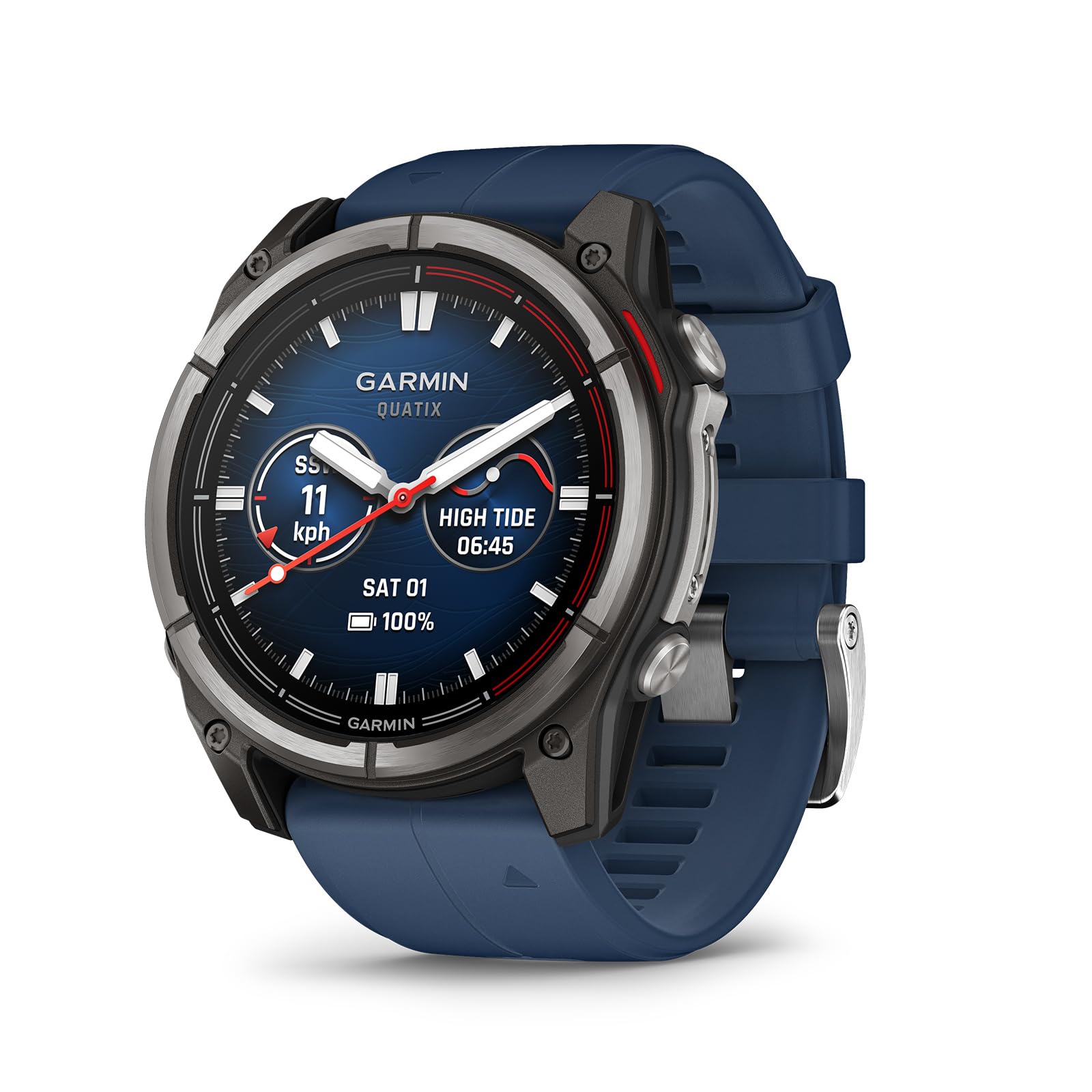
6) Garmin Quatix 8
Pros
- Controls your chartplotter, autopilot, and trolling motor without leaving the helm
- Battery lasts nearly a month in smartwatch mode so you’re not constantly charging
- Built-in flashlight and dive rating make it useful for all water activities
Cons
- Learning curve is steep if you’re not tech-savvy
- Phone call quality needs improvement based on real-world testing
- GPS accuracy could be better for the premium price point
The Quatix 8 feels substantial on your wrist with its titanium bezel and sapphire lens. You’ll notice the weight at first, but it quickly becomes natural once you start using all the marine features.
Controlling your boat’s systems from the watch works surprisingly well. Many found themselves adjusting the autopilot and checking depth readings without taking their eyes off the water for long. The voice commands for the chartplotter make docking easier when both hands need to stay free.
The AMOLED screen stays bright even in direct sunlight. You can actually read your speed and heading data without squinting or finding shade. Night operations benefit from the built-in LED flashlight, which provides enough light for quick tasks without grabbing a separate light.
Battery performance really stands out compared to other smartwatches. You’ll get through multiple weekend trips without worrying about bringing the charger. The dive rating opens up possibilities beyond surface boating if you enjoy snorkeling or diving around your boat.
The sail racing features, like tack assist and regatta timer, work well if you’re competitive. Recreational sailors might not use these as much, but having them available adds value. Health tracking runs in the background and provides useful recovery data after long days on the water.
Final Words!
Choosing the right marine watch is about more than just keeping time—it’s about having a reliable tool that can withstand the salt, sun, and spray of life on the water. Whether you need the high-tech navigation of a Garmin or the timeless durability of a Casio, any of the six watches on this list will serve as a dependable companion for your next voyage.
Frequently Asked Questions
Here, you’ll find the most common questions asked by sailors, which will help you make the right marine watch choice for your next boating trip.
Q: What features should I look for in a watch for boating and sailing?
Look for at least 100 meters of water resistance. If you sail offshore or race, choose 200 meters for added safety.
Pick a watch with a screw-down crown to keep water out. Luminous hands and markers also help when you boat at night or before sunrise.
A countdown timer helps during race starts. For comfort, choose a rubber, silicone, or stainless steel strap that resists saltwater and dries fast.
Shock resistance matters too. Waves can slam your wrist against hard surfaces.
Q: Which marine watches are the most reliable for saltwater and ocean use?
Watches with stainless steel cases (316L), titanium, or resin handles saltwater best. These materials resist rust and corrosion.
Brands like Garmin (Quatix series), Casio G-Shock, Seiko Prospex, and Citizen Promaster build models made for ocean use. Many offer 200 meters of water resistance and strong seals.
Rinse your watch with fresh water after every trip. Salt buildup shortens its life.
Q: Are there good boating watches that work well for both men and women?
Yes. Many marine watches now come in multiple case sizes, usually between 38mm and 44mm.
A 40mm to 42mm case fits most wrists. Slim cases and flexible straps make long days on deck more comfortable.
Neutral colors like black, navy, silver, and white work well for anyone. Focus on fit and function instead of labels.
Q: What are the best analog sailing watches for timing races and regattas?
Look for analog watches with a regatta countdown bezel or countdown subdial. These let you track the 5- or 10-minute start sequence.
Models like the Tissot Sailing-Touch (analog-digital) and select Seiko or Citizen regatta chronographs offer clear timing without a fully digital screen.
Large markers and bold hands make quick checks easier. You should read the time in seconds, not squint for it.
Q: Are luxury sailing watches actually worth it compared to mid-range options?
Luxury models often use higher-grade materials, such as sapphire crystal, ceramic bezels, and in-house automatic movements.
They can last decades if you service them. Brands like Rolex (Yacht-Master) and Omega (Seamaster) build strong marine-ready watches.
Mid-range watches from Seiko, Citizen, and Garmin still give you 200 meters of water resistance and solid timing features. You often pay more for brand history and fine finishing than for extra boating functions.
Q: What kinds of watches do ship captains usually wear on the water?
Many captains choose practical tool watches. Digital GPS watches, marine smartwatches, or simple dive watches are common.
Some prefer Garmin marine models for navigation data and tide info. Others stick with analog dive watches because they are easy to read and rarely fail.
Captains focus on reliability first. Style usually comes second.
More Reading:

Daniella has been passionate about travel, the sea, and nature for many years. As a child, she frequently traveled throughout the Mediterranean and continued with her journeys throughout her adult life.
Her experiences have created the desire within her to share her love for traveling with other passionate and adventurers who want to discover beautiful horizons and new cultures.