
We’ve all heard the joke that a boat is just a “hole in the water you throw money into.” But what if that hole started throwing money back? Renting out your vessel is the ultimate way to offset mounting dockage and maintenance fees while keeping your engine in peak condition. If you’re ready to let your boat pay for itself, here is how to rent out your boat safely and successfully.
The Reality Check: Pros and Cons
The Upside:
- Offsetting the “Big Three”: Rental income can easily cover your dockage, insurance, and routine maintenance.
- Better for the Boat: Boats hate sitting idle. Regular use keeps the seals moist, the fuel fresh, and the batteries charged.
- Tax Perks: If you treat it as a business, you can often deduct maintenance and gear as business expenses (check with your CPA first!).
- Networking: If you act as the captain, you get paid to be on the water and meet interesting people.
The Downside:
- Wear and Tear: More hours on the engine means more frequent oil changes and the inevitable “renter rash” (scuffs and dings).
- Insurance Costs: You can’t use your standard policy; you’ll need commercial or P2P-specific coverage, which is pricier.
- Giving Up Your Weekends: The best days to rent—holiday weekends and sunny Saturdays—are exactly when you’ll want to be on the boat yourself.
- Liability: Even with waivers, you are responsible for ensuring the boat is safe and compliant with all maritime laws.
Understanding Your Local Waters
If the pros outweigh the cons for you, the next step is knowing your market. Is your area a hub for tourists looking for a sunset cruise, or is it a fishing destination?
Take a weekend to do some “recon” on apps like Boatsetter and GetMyBoat. Look for boats similar to yours and take note of their daily rates and how busy their calendars look.
You’ll also need to check local regulations; some states are very strict about passenger counts and may require you to have a licensed captain on board if you’re taking payment.
Choosing the Right Platform
The “Airbnb for boats” model has made things much easier for owners. Peer-to-peer (P2P) platforms like Boatsetter, GetMyBoat, Click & Boat, and SamBoat are the most popular choices.
They handle the messy parts—like payment processing and marketing—and many offer specialized insurance that covers the boat only during the rental period.
If you want a more hands-off approach, you might look into Professional Management. Some local boat rental companies will add your boat to their fleet.
They’ll handle the cleaning, the safety briefings, and the mechanical checks, taking a larger cut of the profit in exchange for saving you the time.
Preparing Your Boat (and Your Sanity)
A boat that looks cared for attracts better renters. Before your first booking, do a deep dive into your mechanical systems. Check the bilge pumps, the battery health, and the steering.
If you’re renting regularly, you’ll be putting more hours on the engine, so you’ll need to tighten up your service schedule.
Cleaning is your best marketing tool. A salt-stained deck or a messy cabin is a red flag for renters. Clear out your personal gear—fishing rods, sunscreens, and old towels—to give them a “blank canvas” for their own day on the water.
Finally, double-check your safety gear. Ensure you have enough life jackets for the boat’s maximum capacity and that your fire extinguishers are well placed and up to date.
Creating a Listing That Sells
When writing your listing, skip the fluff and focus on what makes a day on your boat great. Mention the “extras” like a high-end Bluetooth stereo, a swim platform, or a built-in cooler or a cooler bag.
Photos are everything. Take your photos on a bright, sunny day. Show the helm, the seating areas, and a wide shot of the boat on the water. Be clear about your rules—if you don’t want pets or smoking on board, say so upfront to avoid awkward conversations later.
Setting the Ground Rules
Clear boundaries protect you and the renter. You’ll want a solid rental agreement that covers:
- Fuel Policy: Do they return it full, or do you charge a flat fee?
- Boundaries: Are there specific “no-go” zones or shallow areas they should avoid?
- Security Deposits: This is your safety net for minor dings or lost fenders. For a standard powerboat, a deposit of $1,000–$2,500 is common.
One of the biggest decisions you’ll make is whether to allow Bareboat Rentals (where the renter drives) or Captained Charters.
If you aren’t comfortable with a stranger at the helm, requiring a captain is the best way to ensure your boat is handled professionally.
Managing the “Human” Element
Screening your renters is where your gut instinct comes in. On P2P platforms, check their reviews and don’t hesitated to ask questions: “How much experience do you have with a boat this size?” or “Where are you planning to head today?”
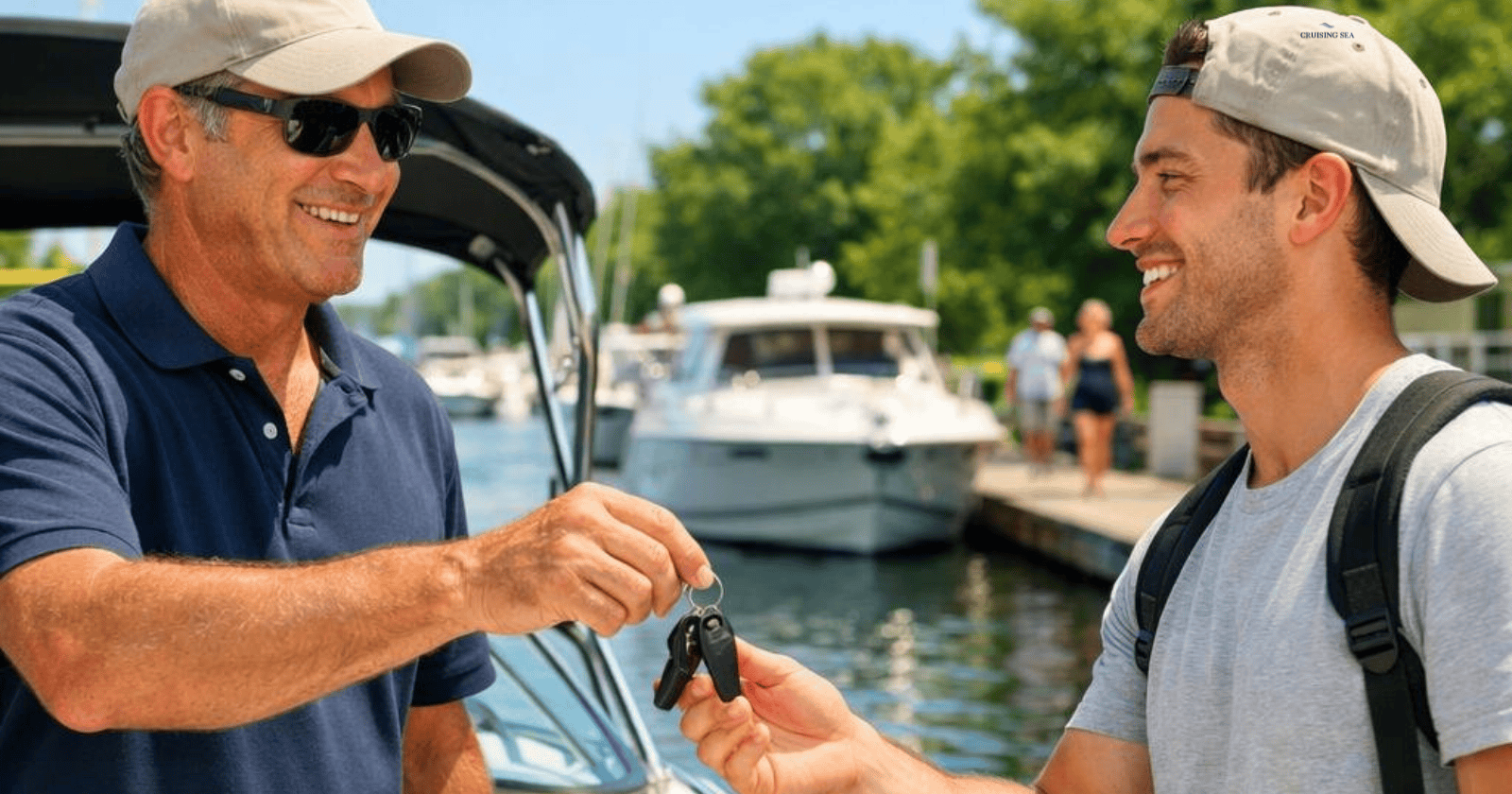
When it’s time for the hand-off, don’t just wave them away. Spend 15 minutes walking them through the boat. Show them how the anchor works, where the life jackets are, and how to trim the engine.
Taking “before and after” photos of the prop and the hull is a professional way to ensure there are no disputes about damage when they return.
Growing Your Business
If you find that your calendar is constantly full, you might have a real business on your hands. Successful owners often reinvest their profits into “value-adds” like towable tubes, premium fishing gear, or even a second vessel.
The key to longevity in the rental market is consistency. If you provide a clean, safe boat and a smooth check-in process, the five-star reviews will follow—and in the world of boat rentals, a good reputation is the best way to keep your vessel busy and your costs covered.
Final Words!
At the end of the day, renting out your boat is about making your hobby sustainable. While it requires a bit of “elbow grease” and some smart management, the reward is a vessel that stays active and a bank account that stays healthy. With the right platform and a focus on safety, you can stop worrying about the bills and start enjoying the perks of a self-sustaining boat business.
Read Also:

Daniella has been passionate about travel, the sea, and nature for many years. As a child, she frequently traveled throughout the Mediterranean and continued with her journeys throughout her adult life.
Her experiences have created the desire within her to share her love for traveling with other passionate and adventurers who want to discover beautiful horizons and new cultures.