
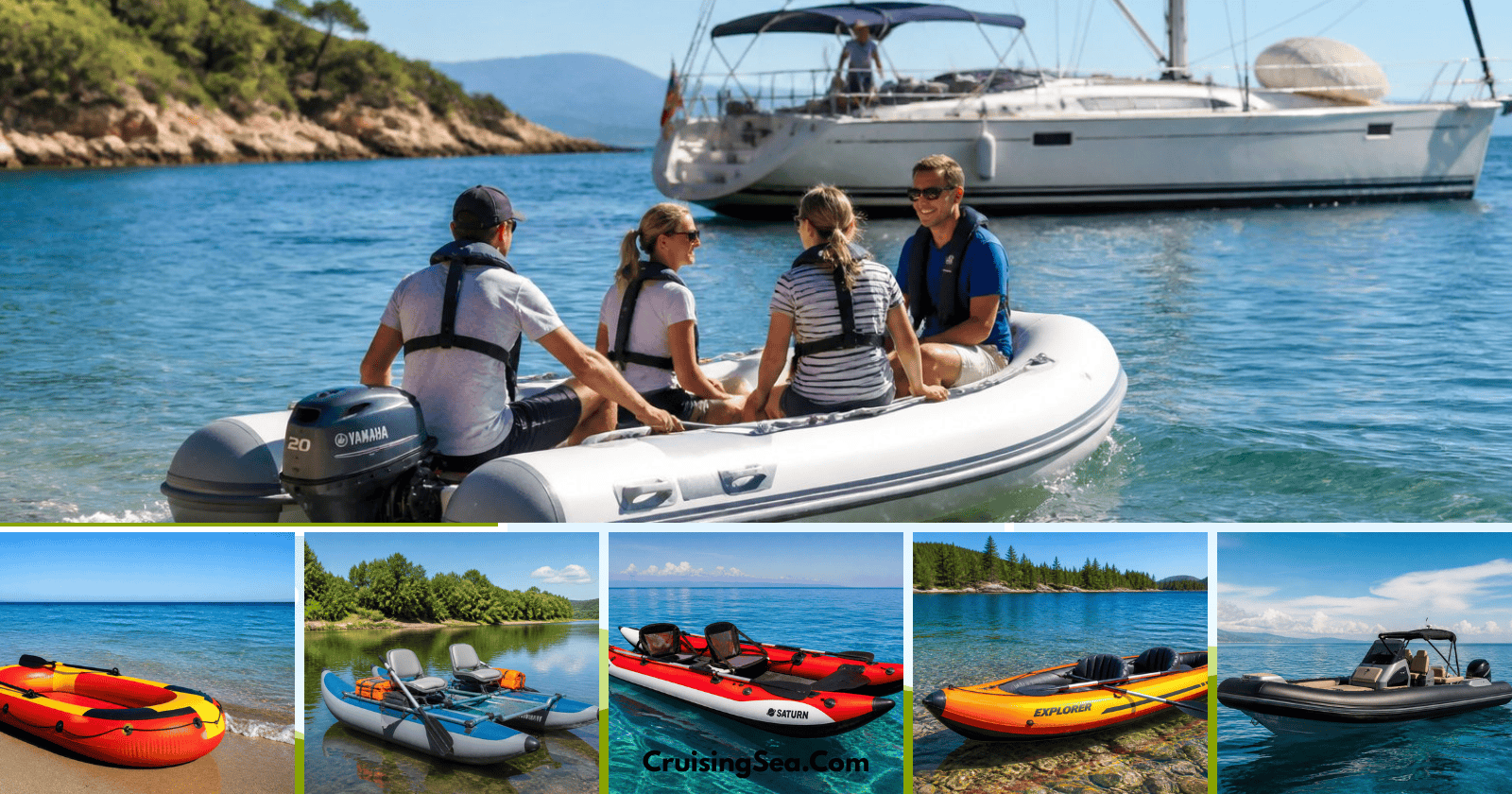
Inflatable boats have become a go-to choice for people who want to get on the water without the hassle or cost of a traditional boat. They’re easy to transport, simple to store, and surprisingly tough.
Your entire setup fits in the back of your car, and you can be on the water in minutes. That’s the kind of freedom inflatable boats offer.
The types of inflatable boats available today include rafts, dinghies, kayaks, canoes, fishing boats, pontoons, and specialty craft, each built with specific activities in mind.
Some are made for calm water cruising while others can handle rough conditions. The differences come down to shape, size, materials, and purpose.
This guide walks you through every category so you can find the right match, avoid costly mistakes, and spend more time on the water.
This post contains affiliate links. If you use these links to buy something, we may earn a commission. Thanks.
Popular Categories of Inflatable Boats
Inflatable boats come in several main categories that serve different purposes on the water. From solo paddling craft to multi-person fishing platforms, each type offers unique advantages for specific activities.
Inflatable Kayaks and Canoes
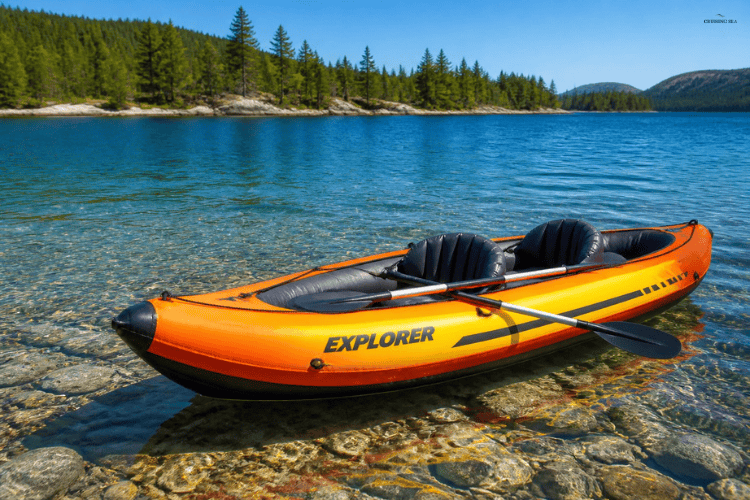
Inflatable kayaks are lightweight boats designed for paddling with a double-bladed paddle. You can find them in single or tandem configurations depending on how many people you want to take along.
These boats are popular because they don’t require much storage space or money compared to hard-shell kayaks. You can fold them up and store them in a closet or car trunk. Most inflatable kayaks have multiple air chambers for safety, so if one chamber gets damaged, the others keep you afloat.
Packrafts are a special type of inflatable kayak made for backpackers and wilderness travelers. They weigh as little as 5 to 10 pounds and pack down small enough to fit in a backpack. You can hike them into remote areas and use them to cross rivers or lakes.
Inflatable canoes work similarly but you paddle them with a single-bladed paddle. They typically have more open deck space than kayaks, which makes them good for carrying gear or fishing.
Read Also: Are inflatable boats safe?
Inflatable Rafts
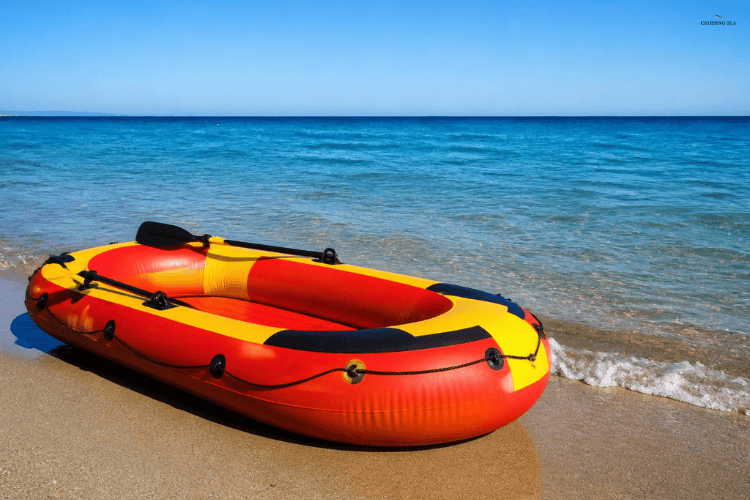
Inflatable rafts feature wide, stable platforms with raised tube sides all around. They work well for fishing, casual floating on calm water, and whitewater adventures.
You’ll find rafts in many sizes, from small 2-person models to large rafts that hold 10 or more people. The floor can be inflatable or hard, depending on the model. Hard floors give you better performance and easier standing, while inflatable floors pack down smaller.
Whitewater rafts use thicker material and reinforced seams to handle rocks and rough water. They have self-bailing floors with drain holes that let water flow out. Recreational rafts for calm water are lighter and simpler but won’t hold up to the same abuse.
Read also: How to anchor an inflatable boat
Inflatable Pontoon Boats
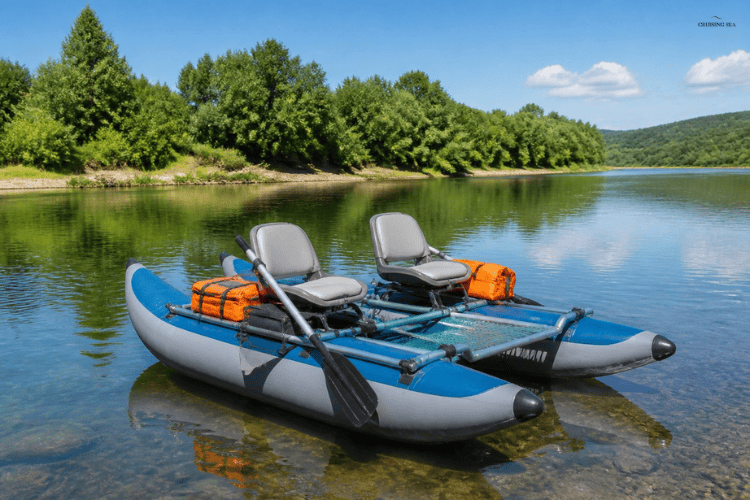
An inflatable pontoon boat uses two long inflatable tubes as the main structure. A frame sits across the tubes and holds a seat and deck platform.
These boats are extremely popular for fishing because they sit high on the water and give you good casting room. You can stand up easily on most models. The open design lets you move around and access your gear without feeling cramped.
Most inflatable pontoons measure 8 to 10 feet long and work well for one person. You can power them with oars, fins that attach to your feet, or a small electric motor. They’re stable enough for lakes and slow rivers but aren’t meant for rough water or rapids.
Read also: How to store an inflatable boat
Inflatable Catamarans and Catarafts
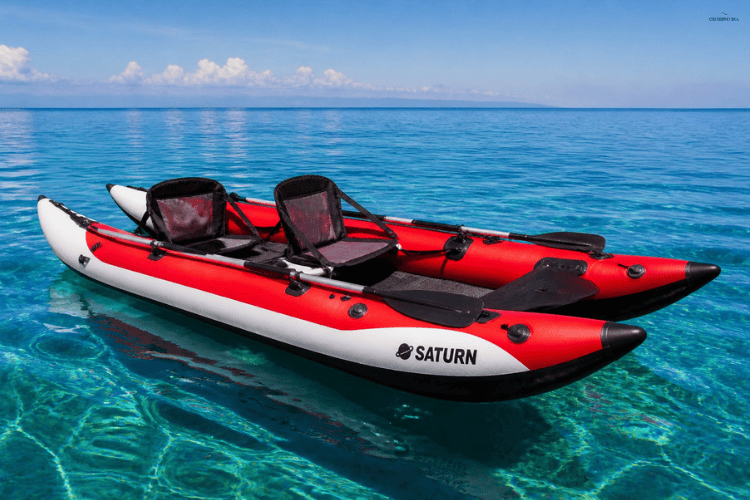
Inflatable catamarans use two parallel tubes connected by a rigid or inflatable deck. This twin-hull design creates excellent stability and lets you carry more weight than single-hull boats.
Catarafts are specialized boats that combine catamaran design with raft durability for whitewater use. They have two narrow tubes instead of one wide raft body. The space between the tubes lets water flow through, which helps them handle speeds better than regular rafts.
You get better maneuverability with catarafts because they’re narrower and respond quicker to paddle strokes. They also ride higher on the water, which keeps you drier in waves. Most catarafts need a rowing frame to hold everything together and give you a place to sit.
Read also: How to clean an inflatable boat
Dinghies, Tenders, and Sport Boats
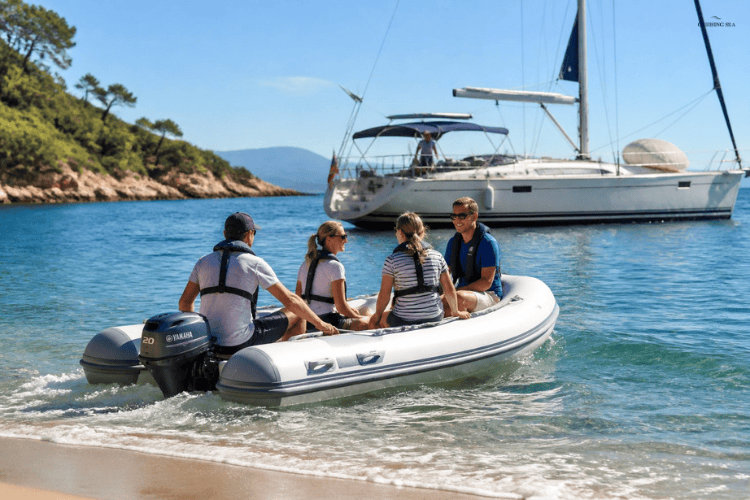
Inflatable boats serve many roles on the water, from shuttling people between shore and larger vessels to providing stable platforms for fishing and water sports. Each type brings specific strengths to different boating situations.
Inflatable Dinghy Essentials
An inflatable dinghy is a small, portable boat that you can deflate and store when not in use. Most dinghies measure between 6 and 12 feet long. They work well for short trips, beach landings, and basic transportation on calm water.
You’ll find two main floor types in inflatable dinghies. Rigid floors use plywood or aluminum panels that you assemble inside the boat. These give you a solid surface to stand on and make rowing easier. Inflatable floors are softer but pack down smaller and weigh less.
Common dinghy features:
- Oarlocks for rowing
- Transom for mounting small outboard motors
- Carrying handles
- D-rings for tying down gear
- Multiple air chambers for safety
Most dinghies can handle motors up to 5-10 horsepower. You can row them if your motor fails or if you’re only going a short distance.
Using Inflatables as Tenders
Tenders ferry people and supplies between your main boat and shore. An inflatable tender needs to be tough enough for daily use and large enough to carry passengers safely.
You’ll want a tender that’s at least 8 feet long if you regularly carry two or more people. The tube diameter matters too. Thicker tubes around 16-18 inches give you more stability when boarding from the water.
Key tender requirements:
- Strong motor mount for reliable power
- Non-slip floor for wet conditions
- Grab lines around the tubes
- Good load capacity for gear and passengers
Storage is easier with inflatables compared to hard dinghies. You can deflate them or use davits to lift them onto your boat’s stern. UV-resistant materials help your tender last longer in constant sun exposure.
Sport Boats and Their Features
Sport boats prioritize speed and performance over cargo capacity. These inflatables use RIB designs with a hard hull bottom and inflatable tubes along the sides.
Sport boat advantages:
- Higher speed capabilities (30+ mph)
- Better handling in choppy water
- More responsive steering
- Stable platform for water sports
You can use sport boats for wakeboarding, tubing, and diving trips. The rigid hull cuts through waves while the inflatable tubes provide buoyancy and cushioning.
Sport boats work as inflatable fishing boats too. The low sides make it easy to land fish, and the stable platform lets you stand while casting. Some models include built-in rod holders and storage compartments. They’re different from a fishing kayak or basic inflatable fishing floats because they can handle larger motors and rougher conditions.
These boats typically range from 10 to 16 feet long. They cost more than basic dinghies but deliver significantly better performance on the water.
Rigid Inflatable (RIBs)
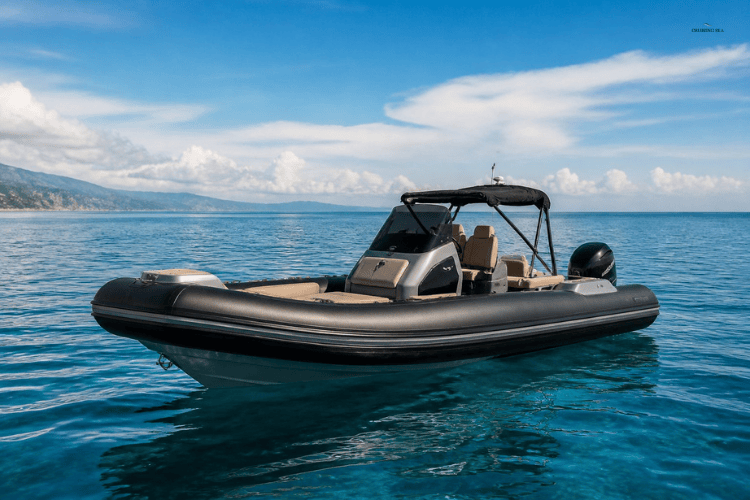
RIBs combine a solid hull bottom with inflatable tubes on the sides, giving you more stability than traditional inflatables while keeping the safety benefits of air-filled pontoons. The hard floor and rigid structure make these boats handle better in rough water and allow for more powerful engines.
What Sets RIBs Apart
A rigid inflatable boat has a hard hull made from materials like fiberglass or aluminum instead of being fully inflatable. The bottom stays firm and rigid, while the sides use inflatable tubes filled with high-pressure air.
This design gives you better performance than soft inflatable boats. The rigid hull cuts through waves more smoothly and lets you reach higher speeds. You can also mount larger outboard motors because the hard floor provides a stable base.
The inflatable tubes on the sides add safety and stability. They create extra buoyancy that keeps the boat afloat even if the hull gets damaged. These tubes also act as cushions when you pull up next to docks or other boats.
RIBs handle differently than other inflatables. The solid bottom provides a more stable platform for standing and moving around. You won’t feel as much flex or bounce under your feet.
Best Uses for RIBs
RIBs are great for coastal cruising and ocean fishing because the rigid hull handles waves better than soft inflatables. You can safely venture farther from shore in rougher conditions.
Many people use rigid inflatable boats as yacht tenders. The inflatable sides protect both your RIB and the larger boat from scratches and dents. They’re also easy to lift and store on deck or davits.
Water sports enthusiasts like RIBs for wakeboarding and water skiing. The hard floor provides the power and stability needed to pull riders effectively. You get performance similar to traditional fiberglass boats.
Search and rescue teams generally choose RIBs because they’re fast, stable, and nearly unsinkable. The same features make them popular with dive operators who need reliable boats for getting to dive sites safely.
Read also:
Frequently Asked Questions
Soft-bottom inflatables work best for calm waters and easy storage, while RIBs handle rougher conditions and heavier motors with their rigid hulls. When choosing a boat, you’ll need to think about where you’ll use it, how many people you plan to carry, and whether you want the option to add a motor.
What’s the difference between a soft-bottom inflatable and a rigid inflatable boat (RIB)?
A soft-bottom inflatable has an air floor that you inflate along with the tubes. You can roll it up and store it in a bag when you’re not using it.
RIBs have a solid fiberglass or aluminum hull on the bottom with inflatable tubes around the edges. The rigid hull makes them track straighter through the water and handle chop better than soft-bottom boats.
Soft-bottom inflatables are lighter and easier to transport. They’re good for short trips in calm water or as travel boats you can pack in your car.
RIBs cost more and need more storage space since you can’t fold up the hull. But they plane faster, handle bigger outboard motors, and give you a more stable ride when conditions get rough.
Which inflatable boat styles are best for fishing versus cruising around?
For fishing, you want a boat with a flat, stable floor and enough room to move around. Pontoon-style inflatables and rafts work well because they sit steady in the water and give you space for tackle boxes and coolers.
RIBs make good fishing platforms too, especially if you fish in areas with waves or current. The rigid hull keeps you more stable when you’re standing to cast or fighting a fish.
For cruising, soft-bottom inflatables are fine if you stick to protected waters like lakes and harbors. They’re easy to set up and get moving.
If you plan to cruise in coastal waters or make longer trips, a RIB handles better at speed and cuts through waves better. You’ll appreciate the smoother ride when you’re covering distance.
How do I choose the right size inflatable boat for the number of people I want to carry?
Every inflatable boat has a rated passenger capacity printed on its identification plate. This rating assumes ideal conditions with no gear or fuel onboard.
In real use, you should plan for fewer people than the maximum rating. A four-person boat will be more comfortable and handle better with two or three people plus your gear and gas tank.
Bigger boats need more space to store and heavier motors to run properly. Think about where you’ll keep the boat and whether you can handle launching it before you size up.
Weight limits matter as much as passenger counts. Stay under the maximum load rating to keep your boat planing well and protect the tubes from extra stress.
Should I get an inflatable boat that can take an outboard motor, or stick with oars?
Oars work fine for short distances in calm water, but you’ll get tired quickly if you need to cover ground or fight wind. Most people who start with oars end up wishing they’d bought a boat with a motor mount.
A boat set up for a motor gives you options. You can still bring oars as a backup but have the power to get places faster and handle current or wind.
Soft-bottom inflatables have lower motor weight limits than RIBs. Check the transom rating before you buy an outboard to make sure your boat can handle it safely.
If you only use the boat for short tender runs to shore or fishing in small ponds, oars might be enough. But for anything more, a motor mount adds a lot of value.
What should I look for when buying a used inflatable boat to avoid surprises?
Check the tubes carefully for patches, discoloration, or soft spots. These signs tell you the boat has been damaged or may have leaks.
Inflate the boat fully and let it sit for a few hours. A good boat will hold pressure, while one with slow leaks will start to sag.
Look at the seams where tubes connect to each other and to the transom. Peeling or separation means the glue is failing and repairs will be expensive.
Ask what material the boat is made from. Hypalon boats last longer than PVC but cost more to repair if something goes wrong.
Check the I.D. plate on the transom for the model, year, and capacity information. This helps you verify what you’re buying and find parts later if you need them.
Which brands and models are considered the most reliable for RIBs and similar boats?
Zodiac makes some of the most trusted inflatables and RIBs in the market. They’ve been building boats for decades and offer models for everything from tenders to serious offshore use.
Achilles builds solid boats with good reputations for durability. Their RIBs hold up well in regular use and maintain their value.
AB Inflatables and Highfield focus on RIBs with quality construction. These brands cost more upfront but typically last longer with proper care.
For soft-bottom inflatables, Sea Eagle and Saturn offer good value with decent build quality. They work well for recreational use without the premium price tags.
Avon makes quality boats but stopped production for a while, so parts can be harder to find. If you buy used, make sure you can still get what you need for maintenance.

Daniella has been passionate about travel, the sea, and nature for many years. As a child, she frequently traveled throughout the Mediterranean and continued with her journeys throughout her adult life.
Her experiences have created the desire within her to share her love for traveling with other passionate and adventurers who want to discover beautiful horizons and new cultures.