
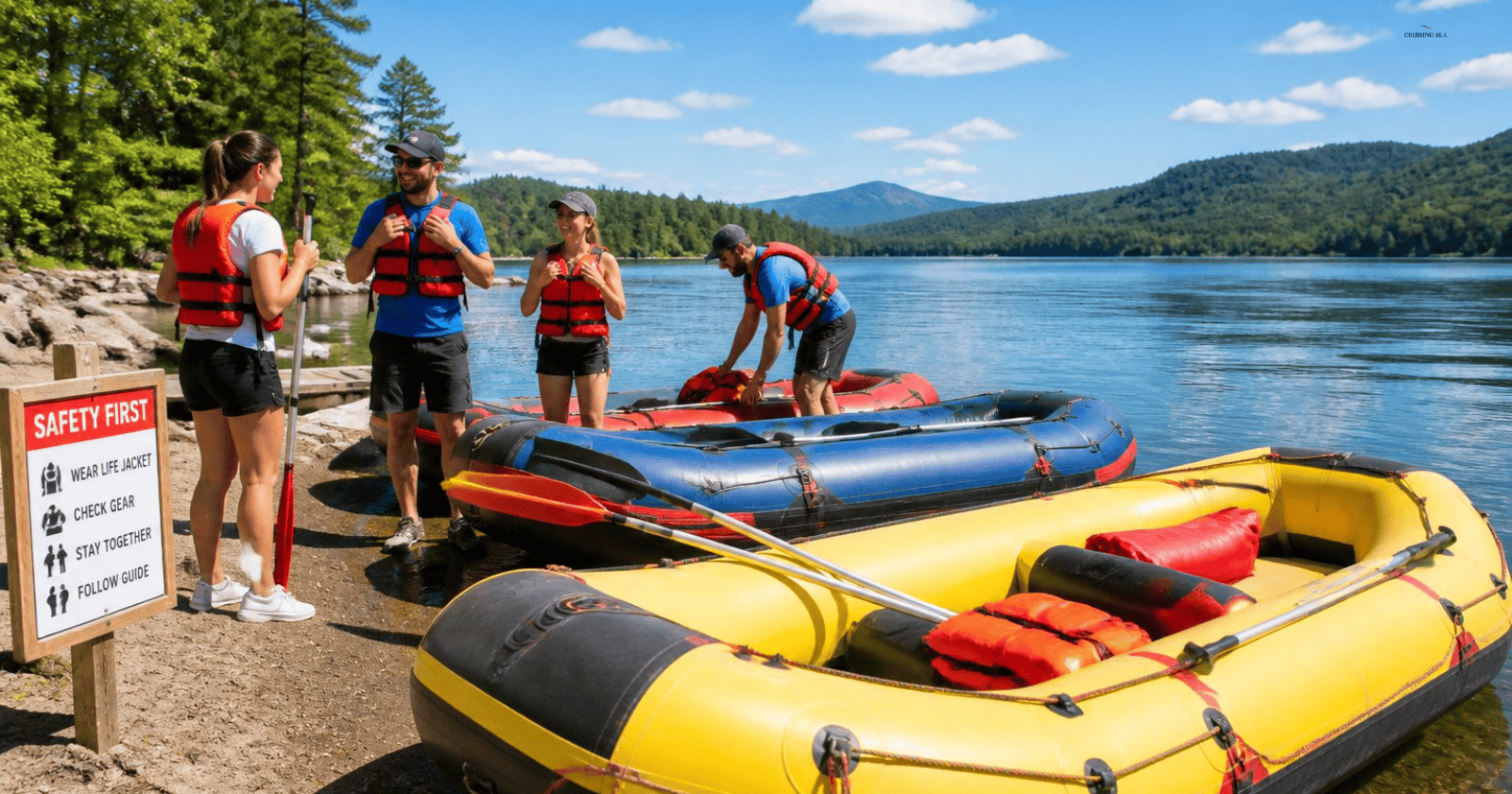
If you’ve ever wondered, are inflatable boats safe? — you’re not alone. It’s the first question most people ask before buying one, and the answer might surprise you. Today’s inflatable boats are built with military-grade materials and reinforced construction that make them a serious option for fishing, leisure, and beyond.
But safety isn’t guaranteed. It comes down to the quality of your boat, where you take it, and how you use it. The wrong boat in the wrong conditions can quickly turn a great day on the water into a dangerous one.
In this guide, I’ll break down what separates a safe inflatable boat from a risky one — covering everything from materials and design to essential gear and common mistakes — so you can hit the water with total confidence.
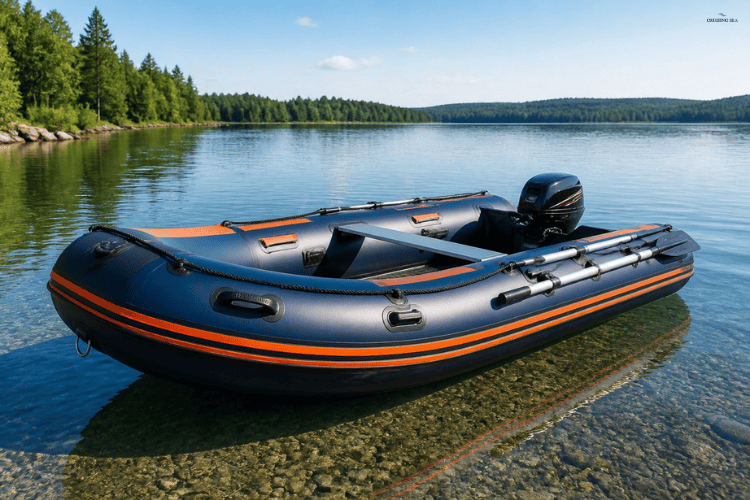
What Makes Inflatable Boats Safe (or Not)?
Inflatable boats rely on smart engineering choices that address the biggest concerns people have about taking them on the water. The safety comes down to how air chambers work together, how the boat sits in the water, and what materials manufacturers use to build them.
Multiple Air Chambers Explained
Your inflatable boat has separate air chambers that work independently from each other. Most quality inflatable boats come with anywhere from three to six air chambers spread throughout the hull.
If one chamber gets damaged and loses air, the other chambers keep you afloat. You’ll still have enough time to get back to shore safely. This design means your boat won’t suddenly sink from a single puncture.
The chambers are sealed off from each other completely. Air can’t move between them, which is exactly what you want in an emergency situation.
Some boats put chambers in different spots too. You might have chambers in the floor, along each side, and in the bow. This setup gives you backup support in multiple areas of your boat.
Buoyancy and Stability on the Water
The air chambers in your boat create buoyancy all around the edges instead of just in one spot. This even distribution keeps the boat stable and makes it harder to tip over.
Your inflatable boat sits lower in the water than you might think. The flat floor design and spread-out buoyancy work together to keep things steady when you move around or when waves hit.
The tube-style sides actually help with stability more than traditional boat hulls do. When you lean to one side, the large air-filled tubes push back against the water and resist tipping. You can move around more freely without worrying about balance as much.
Puncture Resistance and Modern Materials
Modern inflatable boats use PVC or Hypalon materials that are way tougher than what people imagine. These fabrics can take serious abuse before they tear or puncture.
The material thickness typically ranges from 1100 to 2000 denier, which means the fabric can handle scraping against rocks, bumping into docks, and normal wear from regular use. Manufacturers test these materials by dragging them across rough surfaces repeatedly.
You’d need a pretty sharp object and real force to actually puncture quality boat material. Normal fishing hooks, gravel beaches, or light contact with underwater obstacles won’t do it. The fabric also resists UV damage and doesn’t break down quickly from sun exposure like cheaper materials do.
Inflatable Boat Types and Designs
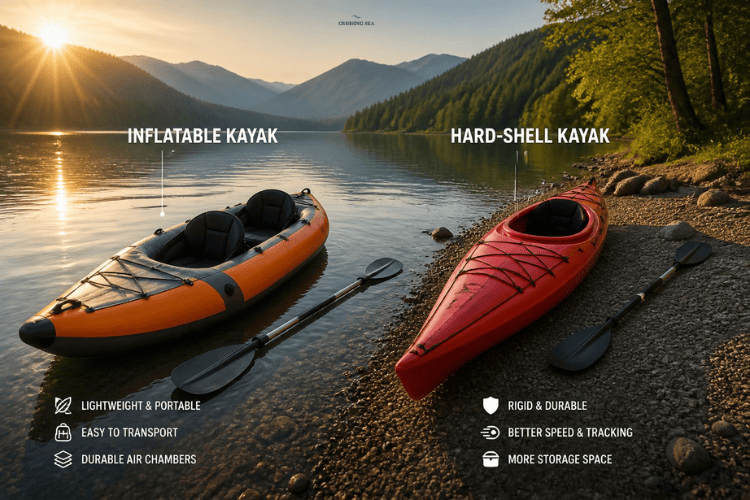
Different inflatable boat designs serve different purposes, and picking the right type for your needs makes a big difference in safety and performance. Inflatable kayaks, fishing boats, and pontoon options each have their own strengths depending on what you’re planning to do on the water.
Inflatable Kayaks vs. Traditional Kayaks
When you’re looking at inflatable kayaks, you’ll notice they handle differently than hard-shell models. Your inflatable kayak sits higher on the water and feels more stable, which is great if you’re a beginner or worried about tipping over. The trade-off is that you’ll catch more wind, and tracking in a straight line takes more effort.
Traditional kayaks give you better speed and control. They cut through water more efficiently and respond faster to your paddle strokes. But you need a roof rack or trailer to transport them, and storing a 12-foot rigid kayak isn’t always practical.
The safety factor comes down to how you use them. Your inflatable kayak won’t sink if you flip it because of the multiple air chambers. Hard-shell kayaks can fill with water if you capsize and don’t have proper flotation installed. For calm lakes and slow rivers, inflatable kayaks from brands like Advanced Elements work fine and pack down small enough to fit in your closet.
Inflatable Fishing Boats and Pontoon Options
Your fishing setup depends on where you fish and how much gear you haul. Inflatable fishing boats come in two main styles: V-hull models and pontoon boats. V-hull designs handle chop better and let you cover more water with a small motor. Pontoon boats give you a stable platform that doesn’t rock much when you’re standing to cast.
Pontoon-style inflatable fishing boats have two or three tubes running parallel. You sit between them on a raised seat, which gives you better visibility and casting angles. They work well in calm conditions but struggle in wind or current.
Sea Eagle makes fishing boats rated for motors up to 7 horsepower, which gets you moving at a decent pace. The weight capacity matters more than you’d think—your gear, cooler, and fish add up fast. Most inflatable fishing boats handle 400-600 pounds safely, but check the specs before you load up.
Major Brands: Advanced Elements, Intex Explorer, and Sea Eagle
Advanced Elements focuses on kayaks with built-in rigid frames. Their models use aluminum ribs in the bow and stern, which helps with tracking and speed. You’ll pay more, but the difference in handling is noticeable compared to budget options.
Intex Explorer boats are entry-level options that work for casual use. They’re cheap enough that you won’t stress about scratches or wear. The materials are thinner than premium brands, so inspect them before each trip. For kids or flatwater use, they get the job done without breaking your budget.
Sea Eagle builds heavy-duty boats with thicker material and higher pressure ratings. Their fishing models include motor mounts, rod holders, and reinforced floors. You can run them in saltwater and rougher conditions than most inflatables. The downside is weight—some models push 60-70 pounds, which makes setup a two-person job.
Essential Safety Features and Equipment
Life jackets keep you alive in the water, grab lines give you something to hold onto when things go wrong, and knowing your boat’s weight limits prevents capsizing before it happens. These aren’t just nice-to-haves—they’re the difference between a close call and a tragedy.
Why Life Jackets and Flotation Devices Matter
You need a USCG-approved life jacket for every person on your boat. That’s the law, and it’s non-negotiable. Type II life jackets work best for most situations because they’ll flip an unconscious person face-up in the water. Type III jackets are more comfortable for active use but won’t turn you over if you’re knocked out.
Here’s what trips people up: having life jackets on board doesn’t count if nobody wears them. Your inflatable boat can deflate or capsize in seconds, and you won’t have time to dig through a storage bag. Kids and non-swimmers should wear their flotation devices the entire time they’re on the water.
Check your life jackets before every trip. Look for rips, broken buckles, and waterlogged foam. If a jacket feels stiff or the straps don’t adjust smoothly anymore, replace it. A worn-out life jacket that doesn’t fit properly can slip off in rough water.
Using Grab Lines and Emergency Repair Kits
Grab lines run around the outside of your inflatable boat and give you something to grip if you fall overboard. Quality inflatable boats come with reinforced grab lines built into the pontoons. Test them by pulling hard—they should handle your full body weight without tearing loose.
Your emergency repair kit should include PVC patches, marine adhesive, a valve wrench, and an air pump. Keep it in a waterproof bag that floats. You don’t want to discover your repair kit sank when you actually need it.
Practice using your repair kit before you’re stuck three miles offshore with a punctured chamber. Most small punctures take 10-15 minutes to patch if you know what you’re doing. The multi-chamber design in quality inflatables means one punctured section won’t sink your entire boat, giving you time to make repairs or head back to shore.
Proper Load Capacity and Weight Distribution
Every inflatable boat has a maximum weight capacity stamped on the manufacturer’s plate. That number includes people, gear, fuel, and your motor. Going over capacity makes your boat unstable and drops the pontoons lower in the water where waves can swamp you.
Weight distribution matters just as much as total weight. Loading all your gear and passengers in the bow or stern will make your boat handle poorly and could cause it to nosedive in choppy water. Spread weight evenly from front to back and side to side.
Your boat will ride lower and handle worse as you approach maximum capacity. A 1000-pound capacity boat feels completely different with 900 pounds loaded versus 400 pounds. If you’re running near your limit, avoid rough water and stay close to shore.
Common Concerns and Real-World Risks
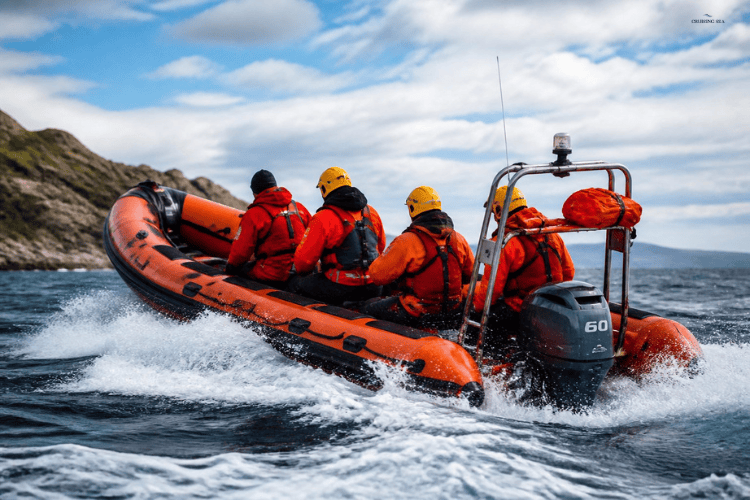
People worry about inflatable boats tipping over in waves, getting punctured by sharp objects, and whether these lightweight vessels can hold up when it matters most. These concerns make sense, but the reality is more straightforward than you might think.
Are Inflatable Boats Safe on Rough Water?
Your inflatable boat can handle choppy water better than you’d expect, but it depends on the design and how you use it. Most inflatable boats are lighter than hard-shell boats, which means strong winds can push them around more easily. You’ll notice this especially if you’re trying to navigate in open water with white caps.
The key is knowing your boat’s limits. High-quality inflatable boats with rigid floors and proper air pressure stay surprisingly stable in moderate chop. They won’t cut through waves like a deep-V hull, but they ride over them instead. This actually makes for a softer ride in some conditions.
Don’t take your inflatable boat out when:
- Wind speeds exceed 15-20 mph
- Wave heights are over 2 feet
- Weather forecasts show storms approaching
- You’re far from shore in open water
Stay close to the shoreline when you’re just starting out. You’ll get a feel for how your specific boat handles different conditions. Some people use their inflatables in ocean surf, but that takes experience and the right equipment.
Dealing with Punctures and Quick Fixes
Punctures happen, but they’re not the instant disaster people imagine. As previously mentioned, modern inflatable boats have multiple air chambers, so if one gets damaged, the others keep you afloat. You won’t just sink like a rock.
Sharp rocks are your biggest enemy. Check your launch area before you put your boat in the water. Oyster beds, broken glass, and metal debris can all cause problems. Most small punctures happen during loading and unloading, not while you’re actually on the water.
You can fix most punctures yourself in about 15 minutes. Keep a repair kit with PVC patches and marine-grade adhesive in your boat. Clean the area around the hole, apply the patch, and let it cure. Some people carry duct tape for emergency fixes that’ll get you back to shore.
The puncture resistance on quality boats is actually pretty good. The material is thicker than people think, usually multiple layers of reinforced PVC or Hypalon.
How Reliable Are Inflatable Kayaks and Boats Really?
Your inflatable boat will last 5-10 years if you take care of it properly. That’s not a guess—that’s what most manufacturers design for. The materials hold up well when you rinse them after use and store them out of direct sunlight.
Inflatable kayaks are safe for recreational use on lakes, slow rivers, and calm coastal waters. They use the same construction methods as larger inflatable boats, with sealed air chambers and tough outer shells. The military actually uses inflatable boats, which tells you something about their reliability.
Reliability factors you control:
- Proper inflation (check pressure before each use)
- Regular inspections for wear and damage
- Cleaning after saltwater exposure
- Dry storage away from extreme temperatures
The seams are usually the first thing to show wear. You’ll see some discoloration or slight separation before they actually fail, which gives you time to repair or replace your boat. Quality matters here—cheaper boats use inferior gluing methods that don’t hold up as long.
Best Practices for Staying Safe on Inflatable Boats
Keeping your inflatable boat in good condition and knowing what to do before you hit the water makes all the difference. You need to check your boat regularly, pay attention to weather conditions, and understand the basic rules that apply to your area.
Routine Inspections and Maintenance
You should inspect your inflatable boat before every single trip. Check the seams for any signs of wear or separation. Look over the entire surface for punctures, tears, or weak spots that might cause problems later.
Test all the air chambers to make sure they hold proper pressure. Each chamber should feel firm when you press on it. If one section feels softer than the others, you’ve got a slow leak that needs fixing.
The valves deserve special attention because they’re common failure points. Make sure each valve closes tightly and doesn’t hiss when you tighten it. A loose valve can deflate your boat faster than you think.
Check your D-rings, handles, and attachment points every time. These take a lot of stress when you’re pulling your boat or tying it up. Any cracks or loose fittings need immediate replacement.
Between trips, store your boat in a cool, dry spot away from direct sunlight. UV rays break down the material over time. Keep it partially inflated if you have space, or fold it loosely without creating sharp creases.
Weather Awareness and Trip Planning
Never head out without checking the forecast first. Inflatable boats handle differently than hard-hull boats in wind and waves. What seems like a light breeze on land can push you around significantly on the water.
Wind speeds above 15 mph make controlling your inflatable boat much harder. Waves over one foot can splash water into your boat or make it unstable. If conditions look sketchy, just stay on shore.
Always tell someone where you’re going and when you expect to return. Share your exact launch location and planned route. This simple step could save your life if something goes wrong.
Plan your trip based on your experience level and your boat’s capabilities. Don’t venture into open water or far from shore if you’re new to inflatable boating. Stay close to land until you understand how your specific boat handles.
Inflatable Boat Safety Courses and Regulations
Most states require boater education certificates for operating any watercraft, including inflatables. These courses teach you navigation rules, right-of-way, and emergency procedures. You can usually take them online for under fifty dollars.
Your inflatable boat needs proper registration if it has a motor or meets certain size requirements. Check your state’s boating authority website for specific rules. The registration sticker must be visible on your boat.
Carrying required safety equipment isn’t optional. You must have one Coast Guard-approved life jacket per person, a throwable flotation device, visual distress signals, and a sound-producing device like a whistle. Boats with motors also need fire extinguishers.
Some waterways have specific rules about inflatable boats or kayaks. Certain areas might restrict where you can launch or require special permits. Local marinas and parks departments can tell you what applies to your location.
Pros, Cons, and Safety Tips: The Inflatable Kayak Perspective
You’re probably wondering if inflatable kayaks are actually worth your time and money. The short answer is yes, but they come with trade-offs you need to understand before buying.
Inflatable Kayak Pros and Cons
The advantages hit you right away. Storage is a game-changer. You can stuff your kayak in a closet, car trunk, or even check it as luggage on flights. No roof rack needed. No garage space required.
You’ll also appreciate the lighter weight. Most inflatables weigh 20-40 pounds compared to 40-80 pounds for hardshells. You can carry them yourself without throwing out your back.
The stability will surprise you. That wider base means you’re not constantly fighting to stay upright. First-timers feel comfortable within minutes.
But here’s what you give up. Speed and tracking suffer compared to sleek hardshells. You’ll work harder to paddle the same distance. Wind pushes you around more easily.
Setup takes 10-15 minutes each time. You can’t just toss it in the water and go. Deflating and drying before storage adds another 15 minutes.
Durability improves every year, but you’re still dealing with an inflatable. Sharp oyster shells, fishing hooks, and dog claws become real concerns.
Choosing the Right Inflatable for Your Adventures
Match your kayak to how you’ll actually use it. Weekend lake paddling needs different features than ocean fishing or river running.
Budget models from Intex work fine for occasional calm-water use. You’ll spend $100-300 and get a few seasons of casual fun.
Mid-range options like Advanced Elements run $300-700 and handle diverse conditions better. These typically include drop-stitch floors and better materials.
Premium Sea Eagle models cost $700-1500 but deliver performance closer to hardshells. You get reinforced construction, higher weight limits, and longer lifespans.
Look for these safety features: Multiple air chambers, welded seams, pressure relief valves, and grab handles. Check the weight capacity against your gear plus your body weight. Add 20% for safety margin.
Your storage situation matters too. If you live in a small apartment, portability trumps performance. Got garage space? Consider whether the convenience justifies the performance compromise.
Frequently Asked Questions
Inflatable boats raise specific questions about their performance in different water conditions, their suitability for ocean use, and whether they work well with motors. People also wonder about their fishing capabilities and why military forces choose them for special operations.
How stable are inflatable boats in choppy water?
Inflatable boats handle choppy water better than most people think. The air-filled tubes act like shock absorbers that help smooth out the ride when you hit waves.
That said, they’re more vulnerable to wind than hard-sided boats. The tubes catch the wind like a sail, which can push you around if conditions get rough. You’ll want to stay close to shore when the weather kicks up.
The design of your boat matters a lot here. Models with rigid floors and deeper V-shaped hulls cut through waves more effectively than flat-bottomed versions.
Can you take an inflatable boat out in the ocean, or is that a bad idea?
You can take inflatable boats into the ocean, but you need the right type. Rigid inflatable boats (RIBs) with solid hulls handle ocean conditions much better than basic inflatable models.
Stick to calm days and stay within sight of shore if you’re using a standard inflatable. These boats aren’t built for open-water navigation in rough conditions.
What’s the biggest downside to owning an inflatable boat?
Punctures and tears are your main concern with inflatable boats. Sharp rocks, fish hooks, and rough surfaces can damage the material even though it’s designed to be tough.
You need to inspect your boat before and after every trip. Look for holes, check the seams, and make sure the valves work properly. This takes extra time compared to just hopping in a hard-sided boat.
Storage and maintenance require attention too. You can’t just leave an inflatable boat outside all season. You need to clean it, dry it completely, and store it in a cool place to prevent mold and material breakdown.
Are inflatable boats a good option for fishing trips?
Inflatable boats work well for fishing in calm waters like lakes and slow-moving rivers. They’re quiet, which helps you avoid scaring fish away.
The soft sides make it easy to climb back in if you fall overboard. You also get more surface area to move around compared to a kayak or canoe.
Just watch out for sharp hooks and fishing equipment. Keep a repair kit with you because punctures happen. Choose a model with multiple air chambers so you can still get back to shore if one section gets damaged.
How reliable are inflatable boats with a small motor attached?
Inflatable boats handle small motors just fine as long as you don’t exceed the weight limit. Most models have a maximum horsepower rating printed on them.
The motor setup changes how the boat handles. You’ll get more speed and better control, but you also need to make sure your boat has a proper transom to mount the motor securely.
Lighter inflatable boats can bounce around more with a motor attached. Models with rigid floors provide better stability and let the motor perform more efficiently.
Why do Navy SEALs use inflatable boats instead of hard-sided ones?
Military forces use inflatable boats because they’re fast and nearly silent when running at low speeds. This helps teams approach targets without being detected.
These boats are also incredibly portable. You can deflate them, pack them into a small space, and deploy them quickly from submarines, helicopters, or larger ships.
The military versions are built much tougher than recreational models. They use heavy-duty materials and have multiple independent air chambers for safety. If one section gets hit, the boat stays afloat.
More Reading:

Daniella has been passionate about travel, the sea, and nature for many years. As a child, she frequently traveled throughout the Mediterranean and continued with her journeys throughout her adult life.
Her experiences have created the desire within her to share her love for traveling with other passionate and adventurers who want to discover beautiful horizons and new cultures.