Women Olukai Ohana Sandals Review – What Set Them Apart?

Whether it’s for standing for long hours, sailing, going to the beach, or strolling around the neighborhood, you’d probably agree that it is important to wear flip-flops that provide excellent support and comfort for your feet.

With the right pair of flip-flops, you’ll be able to stand and walk around for hours without feeling feet or back pain. That’s right, without any pain! The Ohana sandals are not only fantastic for your feet, but they offer a sporty look as well!

In this women’s Olukai Ohana sandals review, you will find out about the many other great features that these famous flip-flops offer.

Style

The Ohana is a nice pair of flip-flops that you can wear with casual or athletic wear. It wouldn’t be a great idea to wear them with elegant outfits, however, as they may not match really well.

But it all boils down to personal preferences, and what matters most is that you feel good about yourself with what you wear.

The great thing about the Ohana is that they come in many different colors, giving you the possibility to tweak your look without giving up on support and comfort.


Comfort

Many reviewers have reported that Olukai Ohana flip-flops are incredibly comfortable to wear for long durations. Some wearers who suffer from plantar fasciitis have even said that after wearing them, their condition had disappeared!

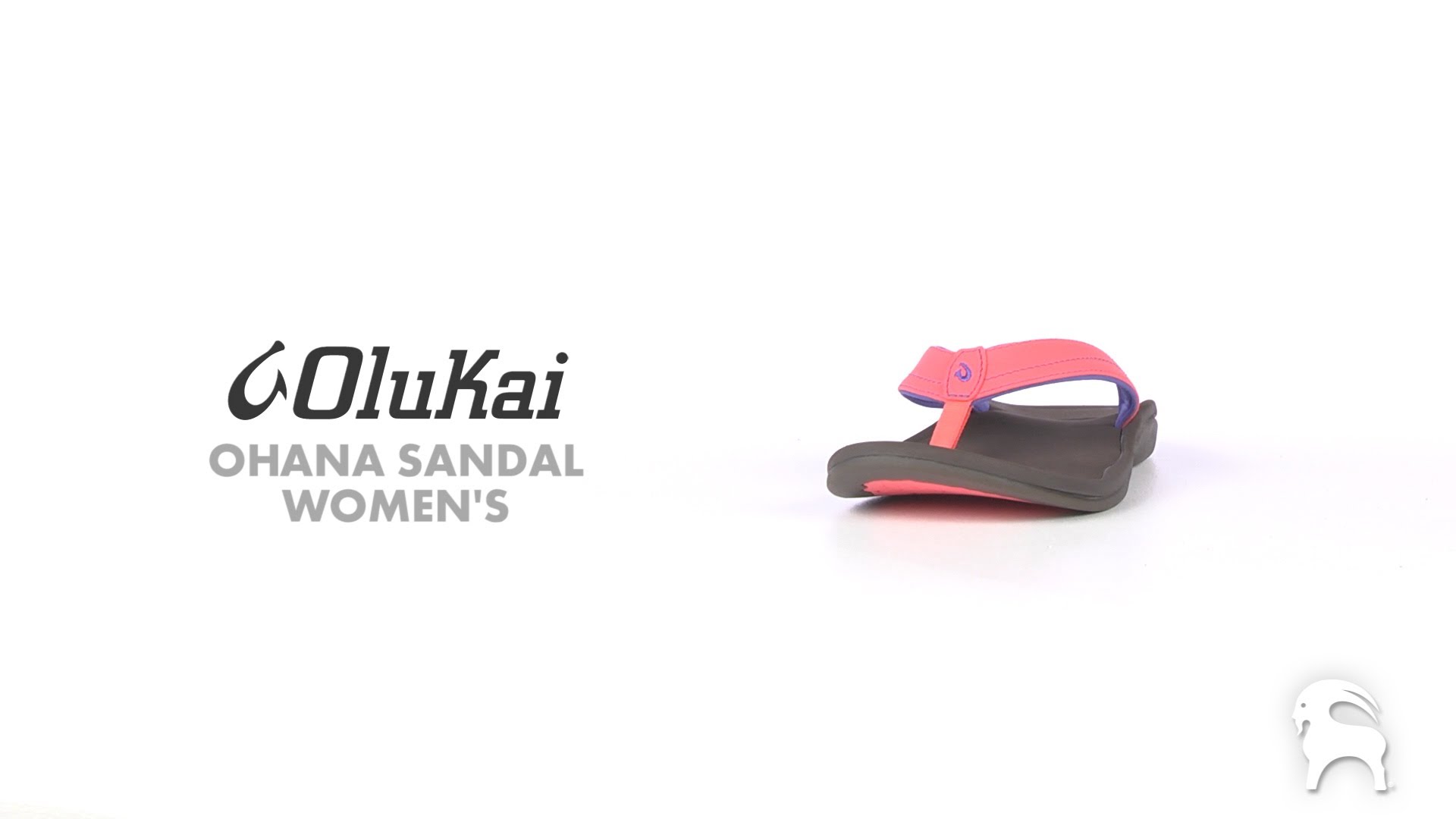
And to be honest, it’s quite easy to believe since these feature an anatomical compression-molded EVA midsole. Olukai engineers have integrated a soft ICEVA material into the footbed, providing excellent support and comfort for your feet!

The synthetic leather straps are wide and padded with a layer of a soft lycra-knit fabric underneath to avoid chafing your feet against it. This adds extra comfort! Something to be aware of, however, the Ohana is quite large, and if you are a half size or have narrow feet, it can cause discomfort. So be sure to pay attention to this before deciding on this shoe!


Support

The Ohana has nice arch support, and the footbed fits the shape of the foot incredibly well, making them more supportive than flat sandals. As I mentioned above, the Ohana is quite roomy and may end up being less supportive if you have narrow feet.

This is something that Amazon customers have stated a few times. Fortunately, this issue can be easily resolved by choosing a smaller size sandal. If orthotic sandals are what you seek, then I would suggest you select the Birkenstock Gizeh, which provides more stability and greater support.


Traction

The outsole is made of thermoset rubber, a 100% natural material, allowing you to walk on any type of surface without fear of scratching delicate floors.

For example, these flip-flops will never leave any mark or scuff on a boat deck or hardwood floor. Additionally, they grip wet surfaces exceptionally well, thanks to their razor-sharp edges. No doubt about it, you will love wearing them everywhere you go as they are suitable for almost all conditions!


Durability

The Ohana is vegan-friendly. The entire sandal is made up of high-quality natural material only. These flip-flops are well-made and can handle all sorts of use and abuse. With this pair of footwear, you can be assured of their durability for years to come.


Water Resistance

Although the Ohana performs well in the water, the footbed tends to absorb the water, but really slowly. Even when wet, it feels secure on the feet thanks to its grippy footbed.

The entire sandals are water resistant, and if they become submerged, the footbed will dry faster than the straps.

Overall, you can expect them to dry quite quickly in the sun but not as fast as some other Olukai models.


Who is the Olukai Ohana Flip Fops for?

Ohana sandals are designed especially for women, but some male reviewers stated that they’ve worn them too and that they find them very comfy 🙂

The Ohana is for anyone who wants to wear a comfortable and supportive pair of flip-flops all day long without feeling any foot pain.

These are awesome when going to the beach or to wear while on a boat or walking around town. They grip exceptionally well, they don’t leave any marks, and they are absolutely adorable!


Why Should You Buy The Olukai?

While a bit more expensive than regular flip-flops, the Ohana is super comfortable. The material of the footbed is remarkable and will provide the same sensation of comfort as if you were standing on a soft mattress with bare feet.

As I stated above, the Ohana is not cheap, but after wearing them for a while, you will understand why they are well worth the price.

So if you want your feet to be happy all day long, you should definitely invest in these great flip-flops. You’ll be glad you did!


Pros

  • Nice arch support
  • Extremely comfortable
  • Supportive
  • Fits well
  • Grippy outsole

Cons

  • Run large
  • A bit expensive

Info:

  • weight: 7 oz / 198 Gr
  • Warranty: One year
  • Material: 100% high-quality synthetic materials. Vegan-friendly!
  • Outsole: Non-marking rubber
  • Footbed: Anatomical compression-molded EVA midsole

Conclusion

Ohana flip-flops will make your feet feel great all day long. While these don’t suit every type of outfit, they are still quite appealing. Not to mention the fact that they provide great support, comfort, traction, and durability.

They run a bit big, so people with narrow feet might find them too roomy, and those that are a half size might want to go down a size. Other than that, there is no doubt that you will love the Ohana sandals from the moment you put them on!

Buy On Amazon

What about you? Do you wear the Ohana flip-flops? If so, you are welcome to share your thoughts about them in the comments below.

AMAZON AFFILIATE DISCLOSURE

Cruising Sea is a participant in the Amazon Services LLC Associates Program, an affiliate advertising program designed to provide a means for sites to earn advertising fees by advertising and linking to Amazon.com


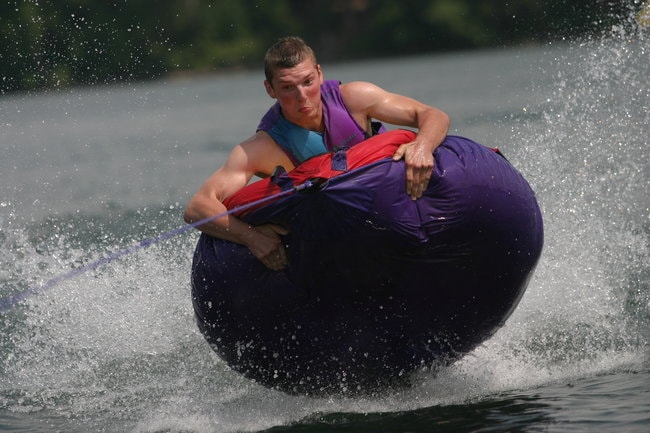
How to Pull a Tube Behind a Boat – Your Ultimate Guide!

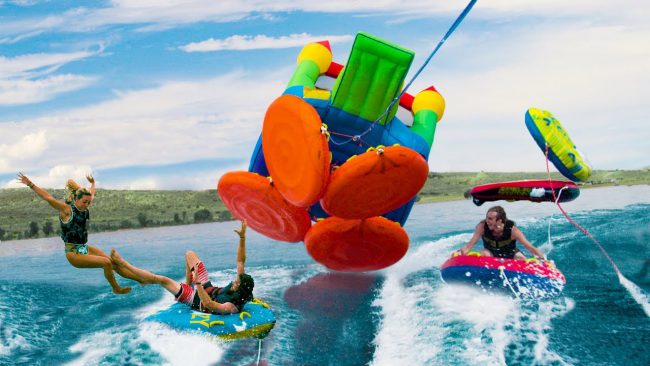
How to pull a tube behind a boat

Going tubing with your friends and family this summer and need some tips for pulling a tube behind your boat? If so, you are in the right place.

Tubing is undoubtedly an exciting watersport if you know how to do it properly.

However, there are specific rules you must follow to have a fun ride on the water while staying safe. So, I have prepared a guide where you’ll find all you need to know about how to pull a tube behind a boat. Read on!


Before You Get On The Water

Before you start tubing, you need to get ready so that you don’t have to come back onshore or, hopefully not, have an unpleasant surprise. First, I’ll give you a small reminder about safety precautions, and then I’ll talk about what you need.

1. Life Jackets: As we all know, safety comes first, so before you get on the water, you and the riders must wear a US Coast Guard Approved life jacket. Make sure it’s comfortable and fits correctly.

2. Attachment point: Decide where you’ll be attaching your towable to your boat. If you secure your towable to a ski pylon or tow bar, ensure the height doesn’t exceed 70cm (2ft); otherwise, it can be dangerous.

Avoid using cleats to pull your towable, as they are not designed for towing tubes. A transom eye is your best bet to pull a towable.

However, it’s always a good idea to speak with the boat manufacturer before and see if the transom eye can withstand the towing force specified on the tube’s label.

3. Prepare your gear: If you secure the tow rope to a low attachment point, it will get underwater and will cause the water to splash straight on the rider’s face, which is not pleasant. So to have a fun ride, there are a few things you would want to get, such as:

  • You can use a booster ball or a turbo swing to keep the tow rope out of the water.
  • Another gear you should consider is a Y harness bridle. This helps distribute the load between the transom eyes and keep the tow line more centered, providing a much safer and enjoyable riding experience.
  • Finally, get a quick connect to secure the rope to the towable for maximum safety.

4. Inflate the towable: To have a good time on the water, it’s super important to inflate your towable properly. It must be firm to the touch and free of wrinkles.

If the towable is under-inflated, this will cause the tube to sit lower in the water. And as a result will put more pressure on the tube, rope, and even your boat since it will drag the tube through the water instead of pulling it.

To inflate your towable easily, use a high-quality electric pump or 12-volt pump complimented with a hand pump. That will do the job.


Pulling a tube behind a boat

Getting On The Water

1. Towable types: Towable tubes come in lay-down or sit-down styles, and each can provide a different riding experience on the water.

For instance, flat tubes give a much slicker ride but can get bouncy, which some people will love, of course. Also, since they have a flat surface, getting them to take off is easier, but they can whip pretty hard, making them great for teenagers or adults seeking adrenaline rushes.

It goes without saying that putting small children on a flat tube wouldn’t be a good idea unless they are used to it.

Sit-down tubes provide more protection on the sides and a more comfortable ride on the water. The downside of those tubes is that they are harder to take off. Sit-down tubes are great for children and less athletic people.

2. Starting Out: Ok, now you have everything ready; it’s time to get on the towable and have fun. But before you turn on the engine and start, ensure your tow rope is at the right length, 50ft min, and 65ft max. If it’s too long, the tube will have difficulty taking off. Also, the riders must lean back when starting out, and once it gets on plane, they can lean forward. Finally, don’t drive too slow or fast if you want your tube to take off.

3. Speed: It’s tempting to drive fast when pulling towable because it’s fun and exciting, but controlling speed must be your top priority to stay safe. Keep in mind that if you swing a towable out, it will go double the speed of the boat. For instance, if you drive at 40mph, the tube will go at 80mph, which is very fast. 20 to 25mph is the maximum speed when pulling a tube in a straight line. In turn, you should go slower, and if you pull children, you shouldn’t exceed 8 to 12 mph, depending on the age of the children.


Do’s And Don’ts

When tubing, there are certain rules you must follow so that everyone can have fun while staying safe.

Tube pulled by a boat

Do’s

1. Make Sure You Have All The Essential

Always have all the necessities on board to keep you and the riders comfortable and safe. Ensure you have water for everyone to stay hydrated, sunscreen, towels, and hats.

2. Be Careful When Coming Back To The Riders

When you return to the riders, be careful not to ride over your tow rope. Make sure to make a big turn and once you get to them, turn off the engine and help them get on board using the ladder.

3. Have An Eye On The Riders

Whether the law in your country requires it or not, always have a spotter on board to check if the riders are ok. They can fall off the tube, especially if you swing and send them into a wake.

4. Communicate With The Riders

One of The best ways to keep the riders safe is to talk to them before getting on the tube. Teach them some hand signals so that you can understand them from a distance. Here are some signs you want them to use when on the water:

  • Thum up = faster
  • Thumb down = slower
  • Spinning the finger = Keep going or go around again
  • Taping on the head = Stop

Don’ts

1. Never Go Tubing In High-Traffic Areas.

If the place is too crowded, you would be better off canceling the tubing sequence and postponing it to another day. Always go tubing in very open water to prevent any accidents.

2. Don’t Take Risks

Even if the tow ropes are the same length, are well secured, and you ride the boat prudently, pulling two tubes at the same time is not recommended. It can be dangerous. Yes, it’s fun, but why take such a risk?


Final Words!

That’s it! With this guide, you are all set up to have a fun a safe tubing experience. Just make sure you have all the right equipment and ensure everything is ok with your boat, of course, and enjoy!

Want More Tips?

Subscribe to Cruising Sea newsletter to receive every two-week the latest post straight to your inbox!


Want More Tips?

Sign up for Cruising Sea newsletter to receive every two weeks the latest post straight to your inbox!

Do you know other great techniques to pull a tube behind a boat? If so, feel free to share your experience in the comments below.

Airhead AHGF-3 G-Force Inflatable Towable Review – The Super Cool Tube!

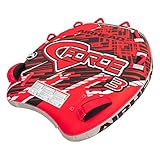
Airhead AHGF-3 G-Force Inflatable Towable

The Airhead AHGF-3 G-Force, from Kwik Tek, is an inflatable towable that’s just perfect for thrill-seekers who are out to enjoy a wild ride.

Right from its topside stabilizer fins to premium nylon cover material all through to the speed safety valve, this towable has everything any rider would ever desire.

And there’s a lot to expect regarding performance and functionality. In the Airhead AHGF-3 G-Force Inflatable Towable review, you’ll find out about the Airhead AHGF-3 G-Force’s design, materials, usability, and whether it’s a product worth buying.


Material

The Airhead G-Force is mainly designed with a heavy-duty 30-gauge virgin PVC bladder and is covered by 840-denier double-stitched nylon, making it extremely sturdy.

It also features deluxe nylon-wrapped handles reinforced with six neoprene knuckle guards.

Since this fun water toy is made of premium quality, it offers excellent functionality and durability. This towable is meant to last for a long time!


Design

Airhead G-Force inflatable dominantly features red and black colors with cartoon drawings on the upper base.

While that might point to the fact that it’s intended for children, adults can as well ride on it, so long as they adhere to the recommended weight limit.

The towable also comes with high-impact Kwik Connect that has a 1-inch diameter hole that accepts up to 6,000 pounds of break-strength tube ropes. Though the Airhead G-Force’s shape looks almost like a giant toilet seat, it is really a fun toy to ride on.


How Durable Is The Airhead?

Judging by its heavy-duty PVC material and tough nylon cover, you can expect the Airhead to last much longer, if not a lifetime. And Amazon’s customers who have rated the product so far affirm that its durability is remarkable.

Most of them love the fact that it’s easier to patch or mend the inflatable as well as replace the bladder. That means even with harsh use, it will surely last a couple of seasons.

But the amount and level of durability of this toy are mainly dependent on how much care you’ll give it.


What’s The Weight Limit?

There’s really no definite weight limit set for this inflatable towable. One thing is for sure, though, that it can hold three adults, and seems like you will have to do your own weight estimation.

Three kids aboard the towable can be great regarding weight distribution, but teens or adults of reasonable weight can gladly use it, too.

It all boils down to how small and light you are and how you position yourselves for you to attain stability during the ride.


How Many Can People Ride On The Airhead AHGF?

The Airhead G-Force is designed to carry a maximum of 3 people onboard. That explains the six neoprene knuckle guards (2 for each rider) that come with it.

However, that does not mean that there should always be three riders on top of the inflatable when it’s being towed.

One person or two persons can ride on it so long as the balance and stability are well calculated.


Where Can You Use the Airhead AHGF?

The quick answer to that is literally in any water body. You can have the Airhead AHGF towed on the lake, river, or any water mass while you enjoy the thrill of getting splashed by the water.

Or you may just throw it on the pool and lounge about as you sip a drink or have a conversation with friends. But since it’s a towable’, it can be more fun to use it for what it’s really designed for: being towed around the water.


How to Maintain the Airhead AHGF

An important detail not to overlook – You should always store your towable properly, away from sharp objects, fire sources or direct sunlight.

Also, don’t tow it on rocky ground or at the beach (whether inflated or deflated) to minimize susceptibility to sharp objects and increased wear and tear.

And lastly, don’t abuse it too much while on the water, i.e., by getting too many people with too much weight on board. It’s your investment, and so you should take good care of it.


Who is the Airhead AHGF For?

The Airhead AHGF is a great toy for anyone – whether children or adults who want to enjoy the sensation of being towed behind a boat at high speed as water splashes over or the pleasure of lounging on top of the water in a floating party-like manner.

So far, the majority of users are kids of different ages, including teenagers. But you know, adults are also kids:) So they are always free to join the towing party if they wish.


Should You Buy It?

Based on a majority of Amazon’s user reviews, this toy from Kwik Tek is outstanding concerning design features, functionality and durability.

Riding the towable is also super fun as riders of all ages- children, teens, and adults- can easily get on board to enjoy an adrenaline-filled towing along the beach or in the river.

The fact that it’s highly repairable makes it budget-friendly as the user can fix it quickly and go towing instead of replacing it with a whole new one. With the Airhead AHGF, the thrills and the water spills just never get any better. It’s a product worth buying!


Pros

  • Made of durable materials
  • Perfect toy for children and adults
  • Come with a Kwik connector
  • Excellent customer service
  • It is reparable

Cons

  • Tend to submarine when going at slow speed if lined forward.
  • The return policy is 30 days, and the warranty is 90 days

Tips

  1. Don’t overfloat it to avoid leaking problems.
  2. Don’t put your weight too far forward so that the tube stays stable on the water, especially at a slow speed.
  3. Cover your elbows with a long-sleeved shirt to avoid chafing and burns.
  4. Always wear a life jacket when riding on the towable.

Info:

Dimensions: 78” X 75”
Weight: 22.4 Pounds
Model: AHGF-3
Max People: 3
Cover Material: Nylon
Material: Heavy Duty PVC
Boston Valve: 1
Handles: Nylon With Neoprene Knuckle Guards
Warranty: Ninety Day Limited
Fins: Two Inflatable Stabilizer Fin


In Conclusion

Riding on a towable is a great way to enjoy your holiday or weekend out on the beach. It’s not only cheaper but also mad fun as you’ll be able to get up close to the water.

If you’re planning to take your children or teens to the beach this season, then buying one or two Airhead AHGF tubes can go a long way in spicing up your experience.

The fact that the towable is sturdy and more durable makes for a long-term investment for your children.

Get It On Amazon

Have you already tried the Airhead AHGF towable? If so, how fun was it, and are you happy with the product? Feel free to share your experience in the comments below.


AMAZON AFFILIATE DISCLOSURE

Cruising Sea is a participant in the Amazon Services LLC Associates Program, an affiliate advertising program designed to provide a means for sites to earn advertising fees by advertising and linking to Amazon.com
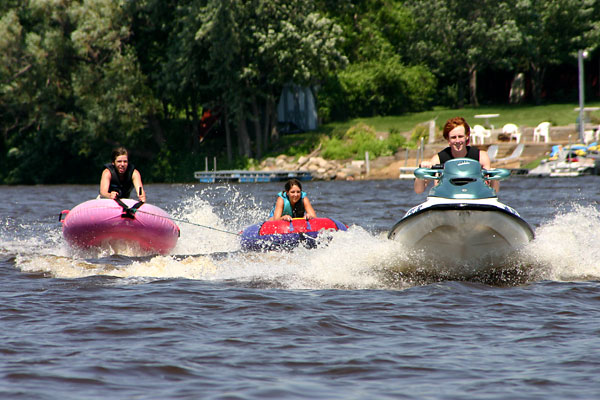
How to Repair Towable Tube – Best Tips and Tricks!

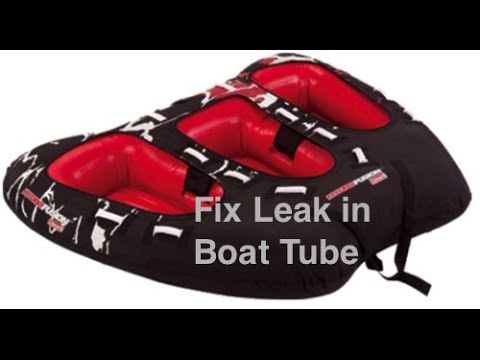
How to repair a towable

Though most of today’s inflatable towables are made from heavy-duty PVC and Vinyl materials, they are bound to get punctured or damaged at some point, either due to improper inflation or normal wear and tear.

When that happens and your towable falls outside the warranty period, you might need to figure out ways of fixing it yourself.

And knowing a few tricks on how to repair towable tubes can go a long way in saving you a lot of money that you would have otherwise spent on a repair shop.

Here is a step by step guide on how to go about it:


Things to Consider Before Starting Anything

Before you start looking for the leak on your inflatable tube, you might need to check the valve to find out whether there’s any grit or sand jamming the device.

It could be that these foreign fragments are causing the safety valve flap not to close properly leading to air leaks.

If that’s the case, you need to blow them out using an air pump or if necessary, replace the valve completely.

If indeed there are any holes or tears on the inflatable, you need to identify the extent of the damage and choose the right repair kit to purchase. Most inflatable towables are made of a substrate and a coating.

The role of the substrate is usually to provide strength while the coating is tasked with the work of providing waterproofing.

A coating can be in the form of a neoprene, Hypalon, or copolymer like PVC. On the other hand, a substrate can either be in the form of nylon or polyester.

Understanding your inflatable’s material will help you choose the right glue for your repair work. For instance, a glue that bonds perfectly with a neoprene material cannot work with a PVC or Hypalon material. Hence you need to be careful when choosing glues.


How to Detect the Leak

One of the most effective ways of identifying a leak on your inflatable is by mixing up dish soap or detergent in water, probably in a small bucket, inflating the tube fully, and pouring or brushing the soapy water on the section(s) you suspect to be leaking. If there’s any hole or leak on the tube, you’ll see soap bubbles form around the spot.

Another method is by removing the inflatable tube from its protective cover; deflating it till it’s about 3/4 full of air and slowly submerging it in water. If you see a line of bubbles from the water, it’s a sign of a leak in the given section. You can continue checking the rest of the tube surface to identify any other possible leaks.


What Material Do You Need?

If you are repairing an inflatable boat made from PVC fabric, you’ll need the following materials:

  • 2903 PVC primer and cleaner
  • 3026 two-part adhesive
  • Paintbrush (20 to 25mm bristles)
  • PVC material
  • Lint-free cloth
  • Polythene
  • Masking tape
  • Smoother for rubbing down

The Process of Repairing a Towable from PVC and vinyl

Whether you want to repair a minor hole or a large tear, there are different repair kits that can be suitable for any type of inflatable you may have. The kits are always available for both PVC and vinyl materials.

 
Steps for Repairing Small Holes in an Inflatable:
  1. Clean the repair area using water (preferably warm) and mild soap. Let it air dry for about 5 to 6 hours.
  2. Apply two or more drops of repair adhesive directly around the hole.
  3. Leave it for 24 hours for the adhesive to dry properly.
 
Steps for Repairing Large Holes in an Inflatable:

If you’re dealing with large holes, you’ll need a PVC or vinyl patch. And to complete the repair, you’ll need to proceed as follows:

  1. Cut the PVC or vinyl patch to a size big enough to cover the hole up to 12 mm beyond it. Be sure to form the patch into an oval or round shape.
  2. Using the lint-free cloth, wipe the surface of the patch and that of the tube with the primer and cleaner. Wipe until the surface is tacky and then allow it to flash off.
  3. Smear or brush a thin layer across the surface of the patch and over the area that needs repair
  4. Allow the patch to dry for close to 5 minutes till it’s tacky before positioning it on the inflatable
  5. Carefully put the patch onto the damaged area or section of the inflatable
  6. Work from the center to the outside of the edges of the patch by pressing down and sliding the smoother to create a seal
  7. Set a heavy object, such as a landscaping stone, on the patched area to ensure it dries perfectly
  8. Leave the adhesive to dry for a minimum of 24 hours


How to Ensure a Towable Repair Success

When applying the adhesive to the damaged area of the inflatable, make sure you smear it throughout the entire hole. You should do the same for the patch.

And if you’re using a self-adhesive patch from the inflatable kit, you may need to add some adhesive to its edges after drying for an even stronger seal.

Always check to confirm whether the adhesive is completely dry and the patch is airtight by pumping the chamber.

Once you are certain the inflatable is leak-free when fully pumped, you can go ahead and launch it back into the waters.


Dos and Don’ts

Before doing any gluing, you should ensure your workplace is well ventilated, warm, and dry. Air that’s too humid can cause the adhesive to bloom fast.

Since an inflatable repair adhesive is highly flammable, you should avoid using it near a gas fire, naked flame heat source, or smoking near it.

While applying the adhesive, you should take precautions to ensure it doesn’t come into direct contact with your eyes, skin, or clothing. If you are working with a two-part adhesive, do not use it if it has been mixed for 4 hours or more.


Tips

  1. Always make sure you have all the materials you need before starting the repair process. That means you’ll start and complete the repair quite seamlessly. If the cut is larger than 75 mm or the towable tube badly damaged, you should consider having it professionally inspected and repaired.

2. Though inflatable tubes are made of highly durable materials, the outer covering is usually very malleable, making them susceptible to abrasions and punctures. So taking proper care of your inflatable is the surest way of avoiding any repairs.

3. Don’t place the inflatable near sharp objects. And you should avoid dragging it on rocks, shells, or barnacles while planning to launch it into the water. If the dock has rough wood edges, you should avoid tying it there.

4. Instead, you should deflate it immediately at the shore after you’re done towing or floating on the waters. Proper care and good maintenance will surely ensure your towable lasts for the longest time possible to give the much fun you so crave for.


In Conclusion

Now that you have all the tips and tricks on how to fix a towable tube, you shouldn’t bother wasting your time and money going to a repair shop next time your toy gets punctured or torn a bit.

But all the same, you should take good care of your inflatable and maintain it properly in order to ensure it lasts longer and gives you more value for money.

Want More Tips?

Sign up to Cruising Sea newsletter to receive every two weeks the latest post straight to your inbox!

More articles

Do you know other ways to repair a towable? If so, you are welcome to share your experience in the comments below.